
What Is Time Confetti? Causes, Effects & How to Stop It
 Kapil Garg |
Updated: April 15, 2026
Kapil Garg |
Updated: April 15, 2026
- What Is Time Confetti?
- What Causes Time Confetti at Work
- The Effects of Time Confetti on Your Output
- 8 Proven Ways to Stop Time Confetti
- Time Confetti in Remote and Hybrid Teams
- How clockdiary Helps You Fight Time Confetti
- Frequently Asked Questions
- Final Thoughts
Ever end a workday feeling like you ran a marathon but crossed no finish line? You answered messages, jumped between tasks, sat through meetings, and still have no idea where the hours went. That feeling has a name: time confetti.
Time confetti is what happens when your day gets shredded into tiny, fragmented pieces of time that are too small to be useful and too scattered to be restful. It's one of the quietest productivity killers in modern workplaces, and most people don't even realize it's happening to them.
In this guide, you'll learn exactly what time confetti is, what causes it, the real damage it does to your output and well-being, and eight proven strategies to stop it in its tracks.
Key Takeaways
- Time confetti refers to fragmented micro-moments that shred your day into useless, unproductive pieces.
- Digital notifications, always-on culture, and context switching are the three biggest drivers of time confetti at work.
- A single interruption can cost up to 23 minutes of recovery time, making fragmented focus far more damaging than it looks.
- Time blocking, task batching, and notification boundaries are the most effective tools for reclaiming lost focus time.
- Time tracking software like clockdiary gives you an objective view of where your day is actually going, so you can fix the gaps.
What Is Time Confetti?
Time confetti is the phenomenon of your day being scattered into tiny, fragmented pieces of seconds and minutes that are lost to unproductive multitasking, constant interruptions, and the pressure to always be "on." Each fragment feels harmless on its own, but collectively they add up to hours of stolen time and depleted focus.
Think of it this way: you sit down to work on a project. Before you get into the zone, a Slack message arrives. Then an email. Then a quick question from a colleague. Then you check your phone out of habit. By the time you look up, 45 minutes have passed and you haven't produced anything meaningful. That's time confetti doing its damage.
The Origin of the Term
The term was coined by Brigid Schulte, an award-winning journalist and author of Overwhelmed: Work, Love, and Play When No One Has the Time. The inspiration came from a surprisingly relatable moment: Schulte was cleaning up after her son's 11th birthday party, sweeping up the bright, scattered bits of confetti from the floor. It hit her suddenly. That was exactly what her time felt like. Bits and scraps, rushing from one thing to the next, trying to do everything all at once.
The term quickly resonated with researchers and workers alike, and productivity researcher Dr. Ashley Whillans later expanded the concept in her book Time Smart, studying how time confetti affects both our work output and our ability to truly rest.
How It Differs from Regular Multitasking
People often confuse time confetti with multitasking, but they're not the same thing. Multitasking is the deliberate attempt to do two or more tasks simultaneously. Time confetti is more invasive: it's the involuntary fragmentation of your time caused by external interruptions and a culture that rewards constant availability.
With multitasking, you at least make a conscious choice. With time confetti, your attention is hijacked without permission. You're not choosing to switch tasks; you're being pulled out of them. That distinction matters because it means the solution isn't just better personal discipline. It requires a structural change in how you manage your environment and your schedule.
What Causes Time Confetti at Work
Time confetti doesn't happen by accident. There are specific, identifiable forces driving it in most modern workplaces. Understanding them is the first step to pushing back.
Digital Notifications and Always-On Culture
The average office worker checks their email up to 74 times per day. Add Slack pings, Teams messages, calendar reminders, phone notifications, and social media alerts, and you have a constant stream of interruptions firing throughout every hour of your workday.
Worse, many workplaces have built an "always-on" expectation into their culture. Responding quickly to messages is seen as a signal of engagement and professionalism. So even when workers know a notification isn't urgent, the psychological pressure to acknowledge it immediately is enormous. The result is a workday carved into dozens of fragmented micro-moments, none of which are long enough to do real, focused work.
Quick check: Count how many times you switch apps or check a notification before noon tomorrow. Most people are shocked by the number when they actually track it.
Context Switching and Attention Residue
Every time you shift your attention from one task to another, your brain doesn't make a clean switch. It carries a "residue" of the previous task with it. Psychologist Sophie Leroy coined this as "attention residue," and it explains why you feel mentally scattered even after you've physically moved on to something new.
The more often you switch contexts, the more cognitive debt you accumulate. Deep, focused work becomes harder and harder to access as your brain spends increasing energy managing the queue of half-finished mental threads rather than producing output. This is what makes time confetti so exhausting: you're not just losing time, you're depleting the mental fuel needed to use the time you do have.
The Illusion of Productivity
One of the most insidious things about time confetti is that it feels productive. You answered messages. You replied to that email. You knocked out a few small to-dos. At a surface level, you stayed busy all day. But at the end of it, the big project didn't move, the strategic work didn't happen, and you feel more drained than fulfilled.
This is what researchers call "fake productivity": activity that generates a sense of busyness without generating meaningful output. And because it gives you a short-term dopamine hit of completion, it becomes habitual. You start reaching for the quick, fragmented tasks not because they matter most, but because they feel satisfying in the moment.
The Effects of Time Confetti on Your Output
Time confetti isn't just annoying. It has measurable, compounding effects on your productivity, your career, and your mental health. Here's what the research shows.
Lost Hours Add Up Fast
Those 10 minutes of distraction here and there might seem like a minor nuisance. But multiply just 10 interrupted minutes per day by 250 working days a year, and you're looking at over 2,500 minutes, which is nearly 42 full hours of lost productivity every single year. That's more than a full work week spent on nothing meaningful, unpaid and unrecoverable.
And that's a conservative estimate. For workers in roles with high communication demands, such as managers, sales teams, or customer-facing roles, the fragmentation can be far worse. Some studies suggest that knowledge workers lose three to four hours of productive time every day to small interruptions alone.
It Destroys Your Flow State
Flow state is the condition of deep, effortless focus where your best work happens. Getting into flow typically takes 15 to 20 uninterrupted minutes of focused effort on a single task. Time confetti makes that nearly impossible to achieve because the average worker is interrupted before they ever get close.
Research from the University of California, Irvine found that after a single interruption, it takes on average 23 minutes and 15 seconds to fully return to your original task. When you consider how frequently interruptions arrive throughout a typical workday, it becomes clear that many workers never actually reach flow state at all. They spend their entire day in a shallow, reactive mode rather than doing their deepest and most valuable work.
The Mental Health Toll
Time confetti doesn't just hurt your output. It also damages your ability to rest. Dr. Whillans's research shows that when leisure time is fragmented by work-related interruptions, people report enjoying that time significantly less, even when the total amount of time off is the same. A two-hour break interrupted three times by work emails feels shorter and less restorative than the same two hours of uninterrupted downtime.
Over time, this creates a sense of time poverty: the persistent feeling that you never have enough time, even when you technically do. Time poverty is strongly linked to anxiety, burnout, and reduced life satisfaction. You end up in a cycle where you feel too busy to rest, but your rest is too fragmented to actually recharge you, which leaves you more burned out and less productive the next day.
8 Proven Ways to Stop Time Confetti
The good news is that time confetti is fixable. You don't need to overhaul your entire life. You need a few deliberate, structural changes that put you back in control of your attention. Here's where to start.
Step 1: Audit Where Your Time Actually Goes
You can't fix what you can't see. Before applying any strategy, spend one full week logging exactly how you use your time in 15-minute blocks. Most people are surprised to discover significant gaps between how they think they spend their day and where their hours actually go. The goal isn't perfection; it's awareness.
A simple time log, or a time tracking tool, will surface the patterns that feed your time confetti. You'll quickly see which interruptions are costing you the most and which parts of your day are most vulnerable to fragmentation.
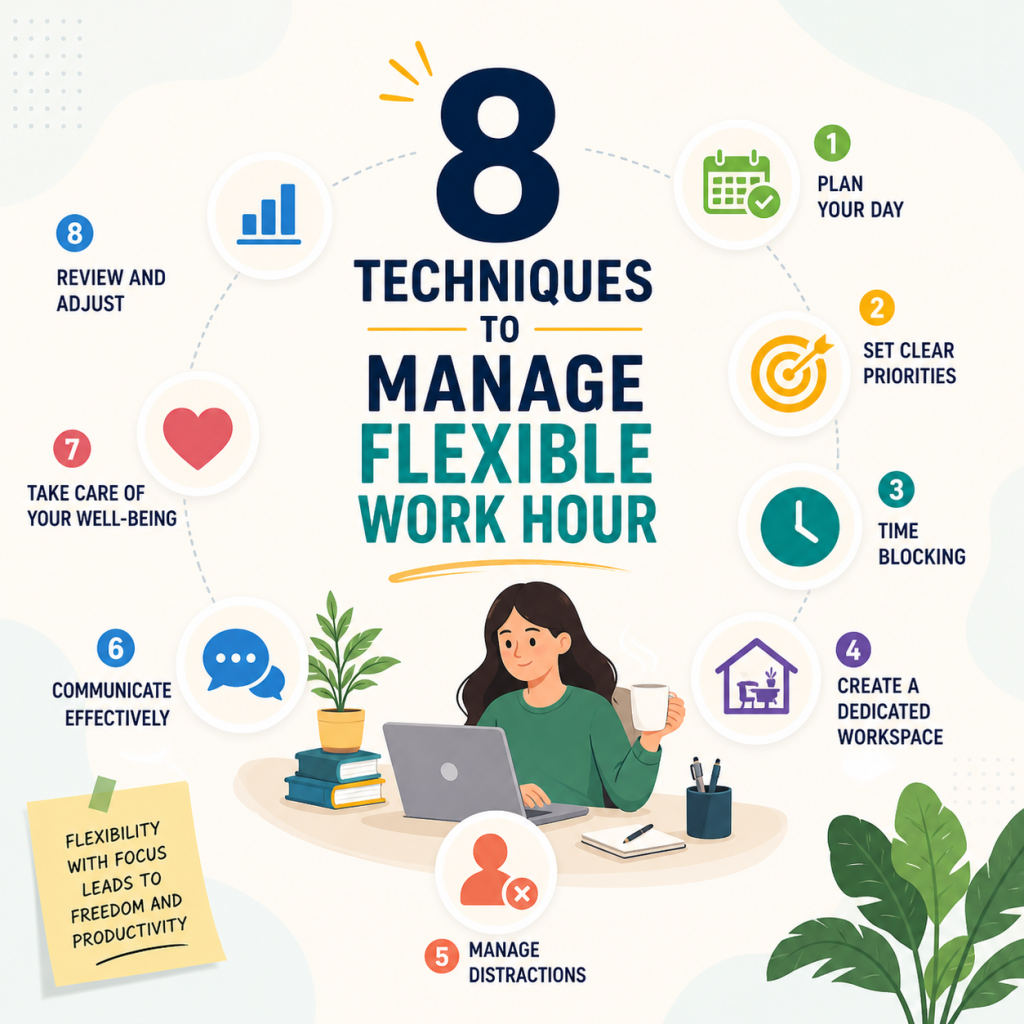
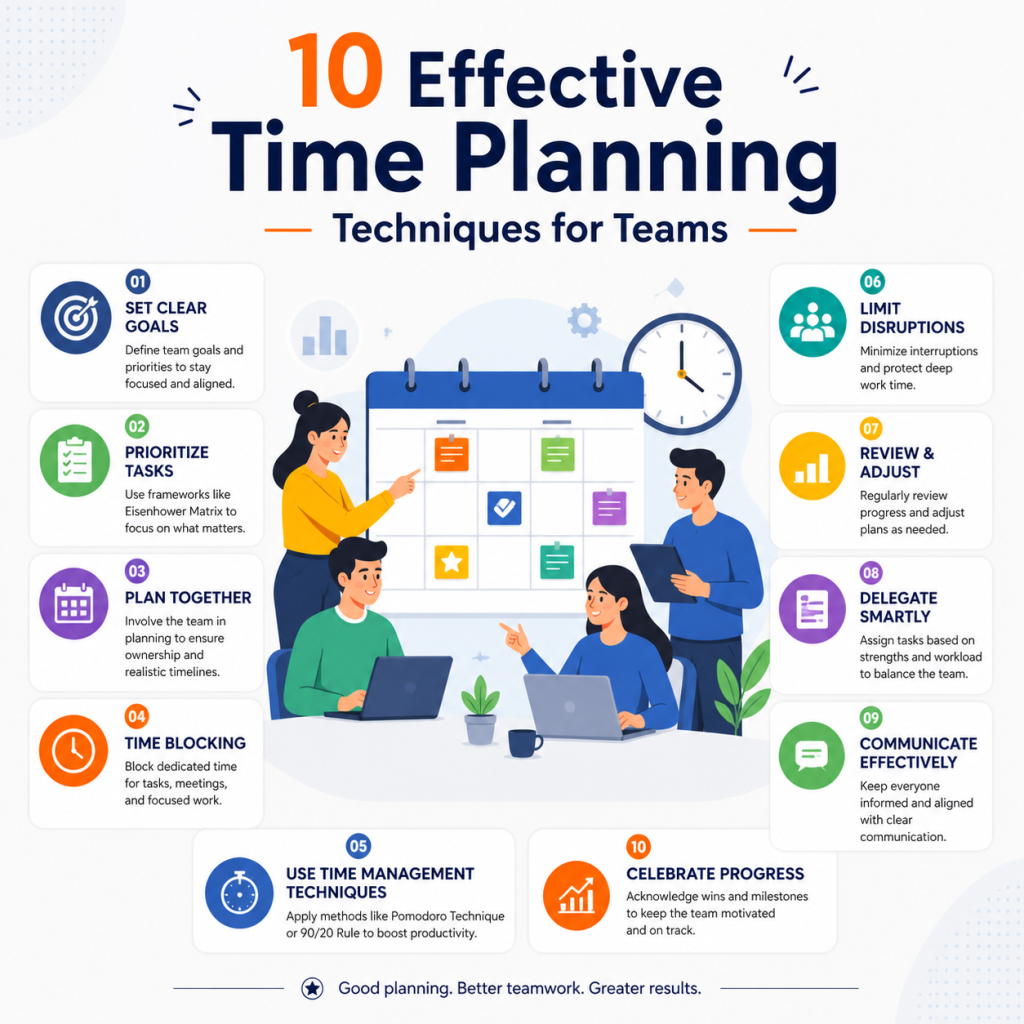
Step 2: Use Time Blocking
Time blocking means scheduling specific blocks of time in your calendar for specific types of work, including focused deep work, communications, and admin tasks. Instead of letting your day be defined by whoever messages you next, you set the agenda in advance and protect it deliberately.
For example, block 9 AM to 11 AM for uninterrupted project work, 11 AM to 11:30 AM for email and Slack, and 2 PM to 4 PM for meetings. This structure ensures that each type of task gets the right kind of attention at the right time, rather than all of them competing simultaneously.
Step 3: Batch Similar Tasks Together
Task batching is the practice of grouping similar tasks and completing them all in one dedicated session. Instead of checking email five times an hour, check it twice a day. Instead of responding to Slack messages as they arrive, set two or three response windows per day and handle everything in one go.
Batching minimizes the cognitive cost of context switching because your brain stays in one mode for a sustained period rather than constantly toggling between different types of thinking. It's one of the simplest and most immediately effective ways to reduce time confetti.
Step 4: Set Hard Notification Boundaries
Every notification is a potential piece of time confetti. Turn off non-essential notifications on your desktop and phone during focus blocks. Put your phone in another room if you need to. Use "Do Not Disturb" modes liberally. Let your colleagues know your communication windows so they don't expect an instant reply outside of them.
It might feel uncomfortable at first, especially in a culture that equates quick responses with professionalism. But the data is clear: the cost of a single notification, even one you don't act on, is a measurable drop in focus quality for the next several minutes.
Step 5: Protect Your Deep Work Hours
Identify the two or three hours each day when your cognitive energy is at its peak. For most people, that's in the morning. Reserve those hours ruthlessly for your most important, high-concentration work. Don't schedule meetings during those hours. Don't check messages. Treat them as non-negotiable appointments with your best work.
These deep work sessions are where meaningful output happens, where complex problems get solved, and where you make real progress on the things that actually matter to your career and your organization. Protecting them is non-negotiable if you want to get out of the time confetti trap.
Step 6: Schedule Real Breaks
Genuine rest is not wasted time, it's essential maintenance. Studies consistently show that workers who take real, uninterrupted breaks are more focused, make better decisions, and sustain output for longer. The key word is "uninterrupted." A break where you're still checking messages or half-thinking about work problems doesn't actually restore your cognitive resources.
Schedule breaks with the same intentionality as your work blocks. Step away completely. Go for a short walk, make a coffee, do something physical. Give your brain a full context switch, not just a mode change. This makes the focus time that follows your break significantly more productive.
Step 7: Eliminate Meeting Sprawl
Meetings are one of the biggest structural contributors to time confetti in organizations. A 30-minute meeting doesn't cost 30 minutes. It costs the 20 minutes of preparation before it, the 15 minutes of mental re-entry after it, and often leaves you with no meaningful block of time on either side to do real work.
Audit your recurring meetings. Question whether each one needs to exist at its current frequency and duration. Push for asynchronous updates where possible. Consolidate smaller check-ins into fewer, longer, more purposeful sessions. Fewer meeting interruptions means longer stretches of unbroken time for focused work.
Step 8: Track Your Time Objectively
Self-perception of time use is notoriously inaccurate. People consistently overestimate how much time they spend on focused work and underestimate how much goes to interruptions and low-value activities. The only way to get a true picture is to track time objectively using a tool, not by memory.
When you see the actual data, the patterns become undeniable and actionable. You'll know which hours are most fragmented, which project types suffer most from time confetti, and exactly where to focus your attention when making structural changes.
Time Confetti in Remote and Hybrid Teams
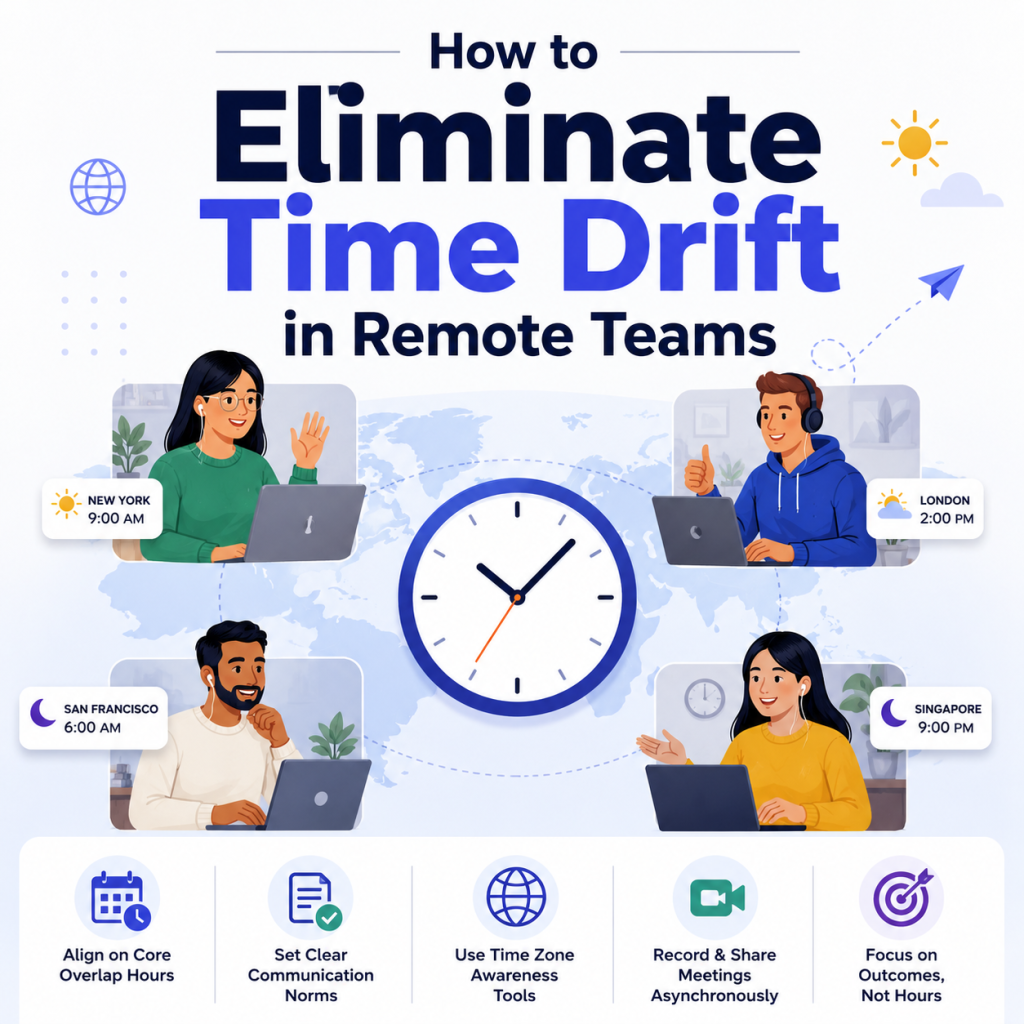
Time confetti is a challenge for everyone, but remote and hybrid teams face a uniquely amplified version of it. The same digital tools that enable distributed work are also the primary engines of fragmentation.
Why Remote Work Amplifies the Problem
In a physical office, there are natural rhythms that create some structure: a walk to a meeting room, a lunch break away from your desk, a visible signal when someone is busy. Remote work strips most of those cues away. The result is an "always-on" pressure that tends to be even stronger at home, where the boundary between work and personal time is already blurred.
Remote workers also tend to rely more heavily on async messaging tools like Slack and Teams to stay connected with their teams. When those tools are open all day with notifications enabled, they become a constant source of time confetti. Every ping is a potential interruption, and the cultural pressure to respond quickly is often higher in remote environments because visibility replaces physical presence as a proxy for engagement.
What Managers Can Do Right Now
Team leaders have an outsized influence on time confetti in their organizations. If a manager sends messages at all hours and expects quick replies, the team will feel compelled to stay fragmented. If a manager models clear communication windows and respects focus time, the team follows.
Practically, managers can establish team-wide "no meeting" blocks each day, set response time expectations that don't require instant replies, and normalize asynchronous communication for anything that isn't genuinely urgent. These small cultural signals can dramatically reduce the structural time confetti that your team experiences every day.
How clockdiary Helps You Fight Time Confetti
Understanding time confetti is one thing. Actually fixing it requires data, structure, and the right tools. clockdiary is built to give you all three without adding complexity to your already-busy day.
Real-Time Tracking as a Focus Signal
One of the most powerful things about using a work hours tracker is what it does to your mindset. When you start a timer for a specific task, you create an intentional commitment. You're no longer in a vague "working" state. You're working on this thing, right now. That mental clarity makes it easier to stay focused and much easier to notice when you've drifted.
clockdiary's real-time tracking creates a natural focus boundary around each work session, making the abstract cost of each interruption concrete and visible. It turns distraction from an invisible habit into a trackable, manageable behavior.
Reports That Surface Fragmentation
clockdiary's automatic reports give you a clear view of how your time is distributed across projects, tasks, and time blocks. If your day is heavily fragmented, you'll see it in the data: lots of short entries, frequent task switches, long gaps between recorded sessions. That visibility is the foundation for every meaningful change you make to how you structure your work.
Teams can use these insights to identify which roles or individuals are most affected by time confetti and take targeted action to protect their most valuable focus hours. Rather than guessing where productivity is leaking, you have the numbers in front of you.
Time Blocking Built into Your Workflow
clockdiary integrates naturally with time blocking by making it easy to plan, assign, and track focused work sessions across your team. You can schedule deep work blocks, protect them from meeting sprawl, and see in real time whether those blocks are being respected or gradually eroded by interruptions.
For managers who want to give their teams back their focus time, clockdiary provides the data and structure to make that goal measurable. It's not about surveillance; it's about giving everyone the clarity they need to do their best work without constantly fighting for the time to do it. See clockdiary's pricing plans and start reclaiming your team's day.
Frequently Asked Questions
What is time confetti?
Time confetti refers to the fragmentation of your day into tiny, scattered pieces of seconds and minutes that are lost to unproductive multitasking, constant interruptions, and reactive work habits. The term was coined by journalist and author Brigid Schulte to describe how modern life scatters our time into scraps too small to be useful. Each fragment feels harmless on its own, but collectively they destroy focus and drain productivity over the course of a day.
Who coined the term time confetti?
Brigid Schulte coined the term time confetti in her 2014 book Overwhelmed: Work, Love, and Play When No One Has the Time. The concept came to her while cleaning up after her son's birthday party, when the scattered confetti on the floor mirrored how fragmented and rushed her own time felt. Researcher Dr. Ashley Whillans later expanded the concept through her own studies on time poverty and time affluence.
How does time confetti affect productivity?
Time confetti prevents workers from reaching the flow state needed for deep, high-quality work. Research shows it takes up to 23 minutes to fully recover your focus after a single interruption, meaning that frequent interruptions effectively eliminate any chance of sustained productive work. Over the course of a year, this fragmentation can cost the average worker over 42 hours of productive time, plus the added cognitive burden of constant context switching.
What causes time confetti at work?
The three primary causes are digital notifications and always-on communication culture, context switching between too many tasks and tools, and the illusion of productivity that comes from busy-but-unfocused work. Remote and hybrid environments often amplify these factors because workers feel more pressure to demonstrate their engagement through rapid responses, rather than through the quality of their focused output.
How do you stop time confetti?
The most effective approaches include time blocking your schedule to create protected focus periods, batching similar tasks into dedicated sessions, turning off non-essential notifications during focus hours, protecting your highest-energy hours for deep work, and tracking your time objectively to identify where fragmentation is happening. Even implementing two or three of these changes consistently can make a measurable difference within a week.
What is the difference between time confetti and multitasking?
Multitasking is the deliberate, conscious choice to work on two or more things simultaneously. Time confetti is the involuntary fragmentation of your attention caused by external interruptions, notifications, and cultural pressure to stay constantly responsive. With multitasking, you're making a choice. With time confetti, your attention is being taken from you without your full consent.
Does time confetti only affect work time?
No. Research by Dr. Ashley Whillans shows that time confetti is just as damaging to leisure time as it is to work time. When rest and personal time are fragmented by work-related interruptions, people report enjoying them less, feeling more time-poor, and recovering less from them. This contributes to a cycle of chronic stress and burnout where neither work nor rest feels fully satisfying.
Final Thoughts
Time confetti is one of those problems that hides in plain sight. You feel busy. You feel like you're working. But at the end of the day, the most important things didn't move, and you're more exhausted than you should be for the output you actually produced.
The solution starts with awareness. You have to see the fragmentation clearly before you can fix it. From there, the strategies aren't complicated: protect your deep work time, batch your communication, reduce the interruptions you can control, and build structure that gives your brain a fighting chance at real focus.
If you want a head start, use a time tracker for one week without changing anything else. Just observe. The data will tell you exactly where your time confetti is coming from, and that's when the real work of reclaiming your day can begin. Try clockdiary free and start turning your scattered minutes back into meaningful hours.