
What Is Attention Residue and Why It Kills Your Focus
 Kapil Garg |
Updated: April 16, 2026
Kapil Garg |
Updated: April 16, 2026
- What Is Attention Residue?
- The Science Behind Attention Residue
- How Attention Residue Kills Your Focus
- 7 Strategies to Reduce Attention Residue
- How clockdiary Helps You Fight Attention Residue
- Frequently Asked Questions
- Final Thoughts
You finish a Slack thread, close the window, and get back to the report you were writing. Two paragraphs in, something feels off. You're reading the same sentence three times. Your thoughts keep drifting back to that message. Sound familiar? That's attention residue at work, and it's quietly costing you hours every single week.
Attention residue is the cognitive leftovers that stick around in your brain after you switch from one task to another. Even when you think you've "moved on," part of your mind hasn't. It's still processing, still replaying, still holding on to the previous task while you're trying to push forward on the next one.
First named by researcher Dr. Sophie Leroy in 2009, attention residue is now recognized as one of the biggest hidden drains on knowledge worker productivity. In this post, we'll unpack exactly what it is, what the science says about it, and seven practical strategies you can use to reduce it starting today.
- Attention residue is the cognitive "leftover" that lingers in your brain when you switch tasks before fully closing out the previous one.
- It was first identified by Dr. Sophie Leroy in 2009 and is backed by solid neuroscience research on task switching and working memory.
- Task switching can rob you of up to 40% of your productive time, and it takes an average of 23 minutes to fully refocus after an interruption.
- Incomplete tasks, constant notifications, and back-to-back meetings are the biggest triggers of attention residue at work.
- Time blocking, task shutdown rituals, batching, and strategic breaks are the most effective ways to reduce attention residue and protect deep focus.
What Is Attention Residue?
At its core, attention residue describes the mental state where your brain is physically present on a new task but emotionally and cognitively still tied to the previous one. You've switched tabs, but your brain hasn't. The residue of the old task lingers, dividing your cognitive bandwidth and reducing the quality of everything you do next.
The Research by Sophie Leroy
The concept was formally introduced by Dr. Sophie Leroy, a professor at the University of Washington's Foster School of Business, through a landmark 2009 paper. Her research showed that when people transition between tasks, especially before fully resolving the first one, they carry a cognitive residue into the next task that measurably hurts performance.
Leroy's studies asked participants to switch between tasks under different conditions. Those who were interrupted mid-task or had unresolved items performed significantly worse on the new task compared to those who had completed their previous work cleanly. The conclusion was clear: your brain needs closure before it can fully commit to something new.
Dr. Sophie Leroy's key finding: "People need to stop thinking about one task in order to fully transition their attention and perform well on another." When that transition is forced or incomplete, performance on the new task suffers.
How It Differs from Regular Distraction
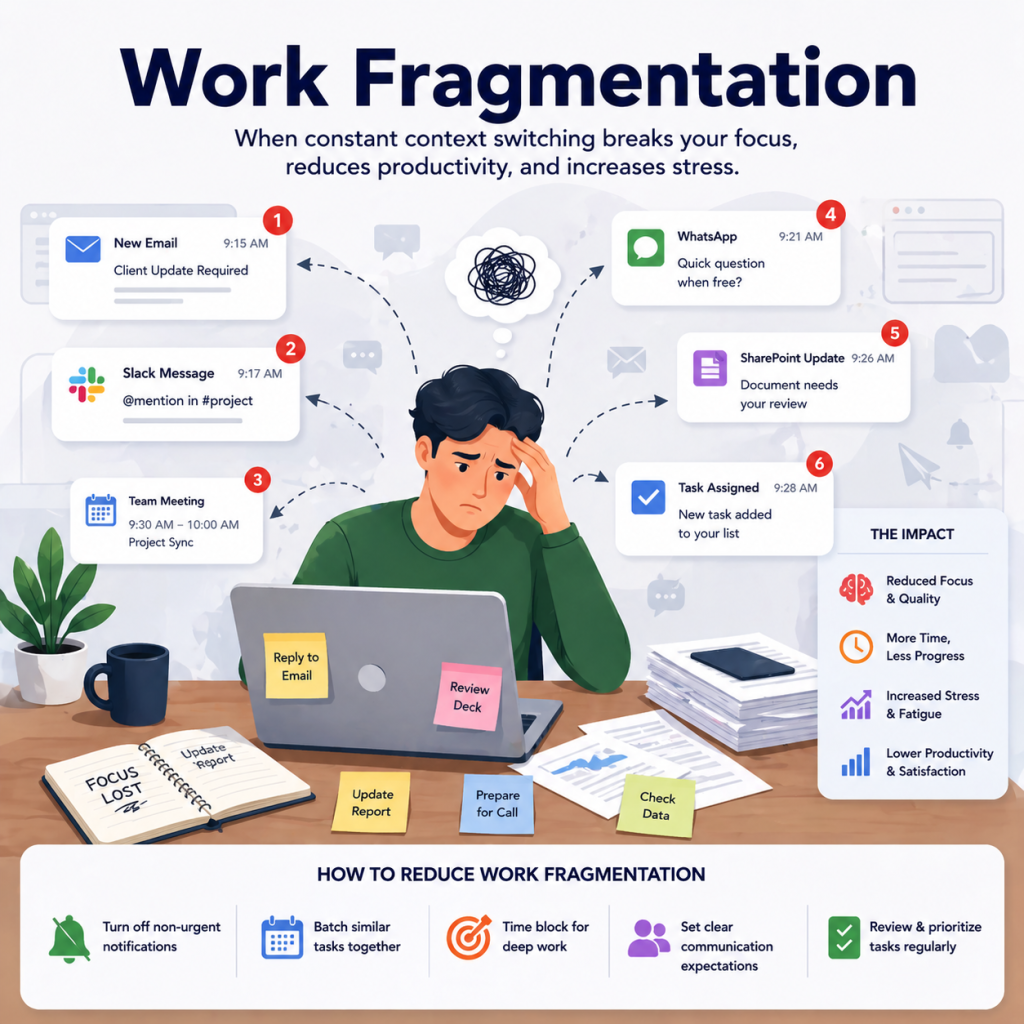
Attention residue is often confused with distraction, but they're different in an important way. Distraction is external: a phone buzzing, a noisy office, a colleague stopping by your desk. You can close the door or silence your phone and it goes away. Attention residue is internal. It's generated by your own brain, and it doesn't disappear just because the external trigger is gone.
You can sit in a completely quiet room and still experience intense attention residue if you just came out of a heated meeting or left a task unfinished. That's what makes it so tricky to manage: the source isn't out there, it's inside your own head.
The Zeigarnik Effect Connection
Attention residue is closely tied to the Zeigarnik Effect, a psychological principle discovered in the 1920s showing that the human brain remembers unfinished tasks far better than completed ones. Your mind literally "tags" incomplete work as an open loop and keeps returning to it until it's resolved.
This is why leaving a task half-done before switching creates more residue than finishing it. Every open loop is a small drain on your working memory. When you accumulate several of them across a day, the cognitive load becomes significant enough to genuinely impair your ability to think clearly.
The Science Behind Attention Residue
Understanding what's actually happening in your brain when attention residue builds up helps you take the right steps to prevent it. This isn't just pop psychology. There's solid neuroscience behind why your brain struggles so hard to let go of previous tasks.
What Happens in Your Brain When You Task-Switch
Every time you focus on a task, your prefrontal cortex builds what neuroscientists call a "mental set," essentially a working configuration of rules, context, goals, and information specific to that task. It's like loading a project into RAM on a computer. When you switch tasks, your brain doesn't just hit save and close the file instantly. It has to deactivate one mental set and activate another, and that transition takes real cognitive effort and time.
The Mental Set Problem
The issue is that deactivating an old mental set isn't instantaneous, especially when the task was emotionally loaded, complex, or unfinished. The prior mental set lingers in your working memory, competing with the new one for cognitive resources. This overlap is the neurological root of attention residue. You're essentially running two background processes at once, and both suffer as a result.
Research suggests it takes an average of 9.5 minutes to fully return to a productive workflow after switching between digital applications, and up to 23 minutes to fully recover from a significant interruption. During that window, you're operating at a fraction of your actual capacity.
Working Memory Overload
Working memory is your brain's short-term mental workspace, the cognitive scratchpad where you hold and manipulate information in real time. It has a very limited capacity. When multiple unfinished tasks are competing for space in that scratchpad, there's simply less room for the work you're actually trying to do right now.
Think of it like a whiteboard that's already covered in half-erased notes from yesterday's meeting. You can still write on it, but there's far less usable space, and the old content keeps bleeding through.
Why Incomplete Tasks Make It Worse
The Zeigarnik Effect means your brain is biologically programmed to keep revisiting unfinished work. But there's a compounding problem: switching away from a task before completing it doesn't just leave one open loop, it triggers a low-level anxiety response. Your brain knows something is unresolved and keeps nudging you to go back and fix it.
This is why meetings that end without clear decisions, emails you've read but not responded to, and projects you've started but not finished all generate more attention residue than tasks you've cleanly completed. The more of these open loops you have going simultaneously, the harder it becomes to give anything your full attention.
How Attention Residue Kills Your Focus (and Costs More Than You Think)
Attention residue doesn't just make you feel scattered. It has measurable, real-world consequences for the quality of your work, your decision-making, and your long-term wellbeing. Here's what's actually at stake.
The 40% Productivity Tax
The most cited stat in this space comes from the American Psychological Association: task switching can cost up to 40% of your productive time. That's not a small inefficiency. If you work an 8-hour day, attention residue and context switching could be eroding the equivalent of more than three hours of actual output.
This loss isn't felt as one big chunk of wasted time. It accumulates in small ways: a paragraph that takes twice as long to write because you keep re-reading it, a decision that takes 10 minutes instead of two because your brain is still processing the last meeting, an error you make because you were mentally elsewhere when you should have been fully present.
Reduced Work Quality and More Errors
When your working memory is split between tasks, your brain can't give any single task the depth of processing it needs. You spot fewer errors in your own writing. You miss details in documents you're reviewing. You ask questions in meetings that were already answered because you weren't fully present when they were.
Dr. Sophie Leroy's research showed this directly: participants who carried attention residue into a new task produced lower-quality work, not because they were less capable, but because they were operating with divided cognitive resources. The capability was there. The available attention wasn't.
Decision Fatigue and Mental Burnout
Every instance of attention residue demands extra cognitive effort. Your brain is constantly trying to manage multiple open loops, suppress intrusive thoughts about the previous task, and push through on the current one. Over a full day, that sustained effort leads to decision fatigue, the gradual decline in decision quality that comes from mental exhaustion.
You've probably noticed this: by mid-afternoon, even small decisions feel disproportionately hard. You stare at a menu longer than you should. You delay replying to a simple email. You default to whatever option requires the least thought. That's decision fatigue, and chronic attention residue accelerates it significantly.
The Remote Work Problem
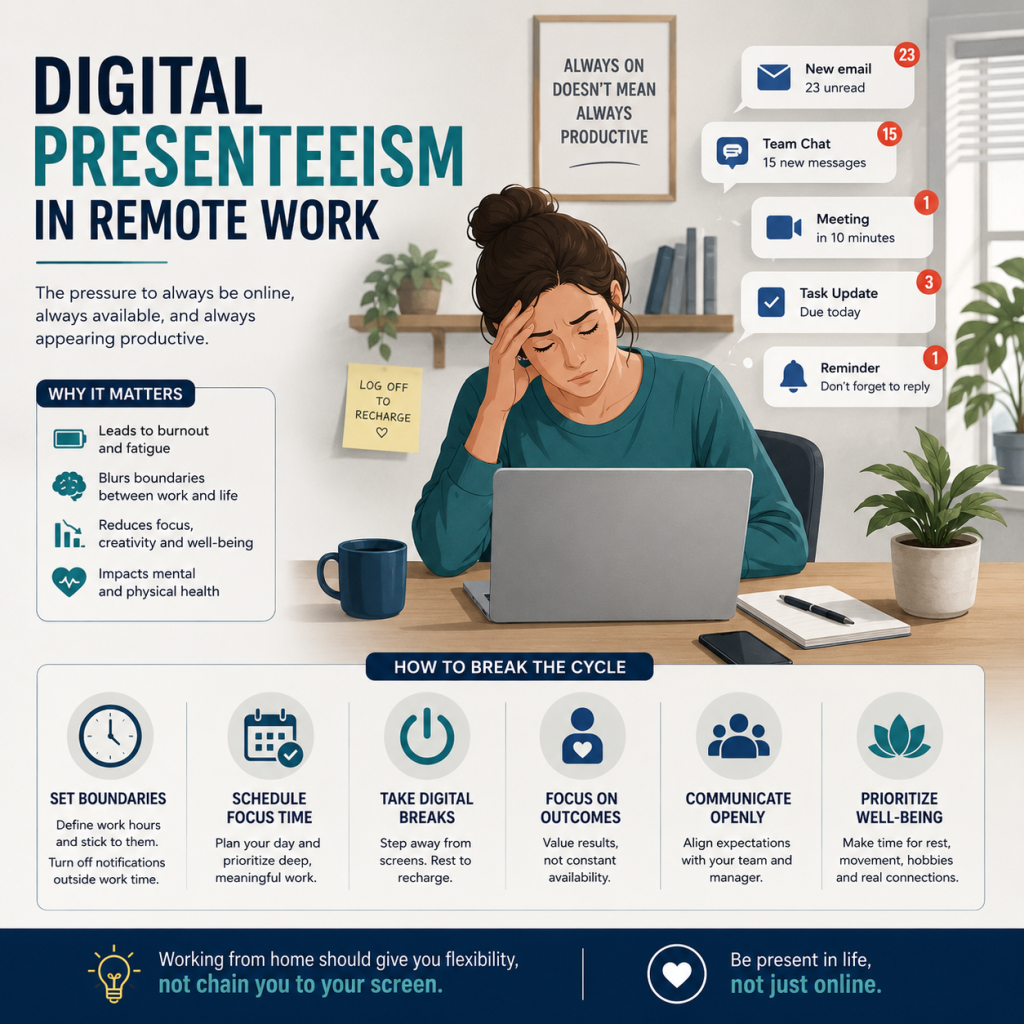
Remote and hybrid workers face a particularly intense version of this problem. When your home is your office, the boundaries between work contexts dissolve. You might be on a video call in one window while a Slack thread is pinging in another, with your email client open in a third tab. The interruption rate is high, the task-switching is near-constant, and the attention residue builds up fast.
There's also no natural "decompression buffer" between meetings in remote work. In an office, walking from one conference room to another gives your brain a few minutes to shed the residue of the last conversation. When your next meeting starts with a single click, that transition time disappears completely, and so does the chance for your brain to reset.
7 Proven Strategies to Reduce Attention Residue
The good news is that attention residue isn't inevitable. With intentional habits and the right structure, you can significantly cut down the cognitive spillover between tasks and reclaim far more of your productive time. Here's what actually works.
1. Create a Task Shutdown Ritual
One of the most effective ways to reduce attention residue is to consciously "close" a task before moving on to the next one. This doesn't have to be elaborate. The goal is to give your brain a clear signal that it's done processing this particular item and can release it from working memory.
A simple shutdown ritual might include: writing a one-sentence note on where you left off, capturing the next action you'll need to take when you return, and saying (even silently) "I'm done with this for now." This brief act of intentional closure is often enough to reduce the residual processing your brain would otherwise continue doing in the background.
-
1
Write a "next action" note
Before closing a task, jot down the very next physical action you'll need to take when you return to it. This offloads the open loop from your working memory onto paper or a task tool.
-
2
State a clear stopping point
Consciously note where you are in the task. "I completed the intro section, next is the data analysis" is a clear stopping point. It lets your brain file the task as "paused intentionally" rather than "abandoned."
-
3
Close the files and tabs
Physically closing the windows and tabs related to the previous task is a surprisingly powerful cognitive signal. Out of sight genuinely helps with out of mind when it comes to attention residue.
2. Use Time Blocking for Deep Work
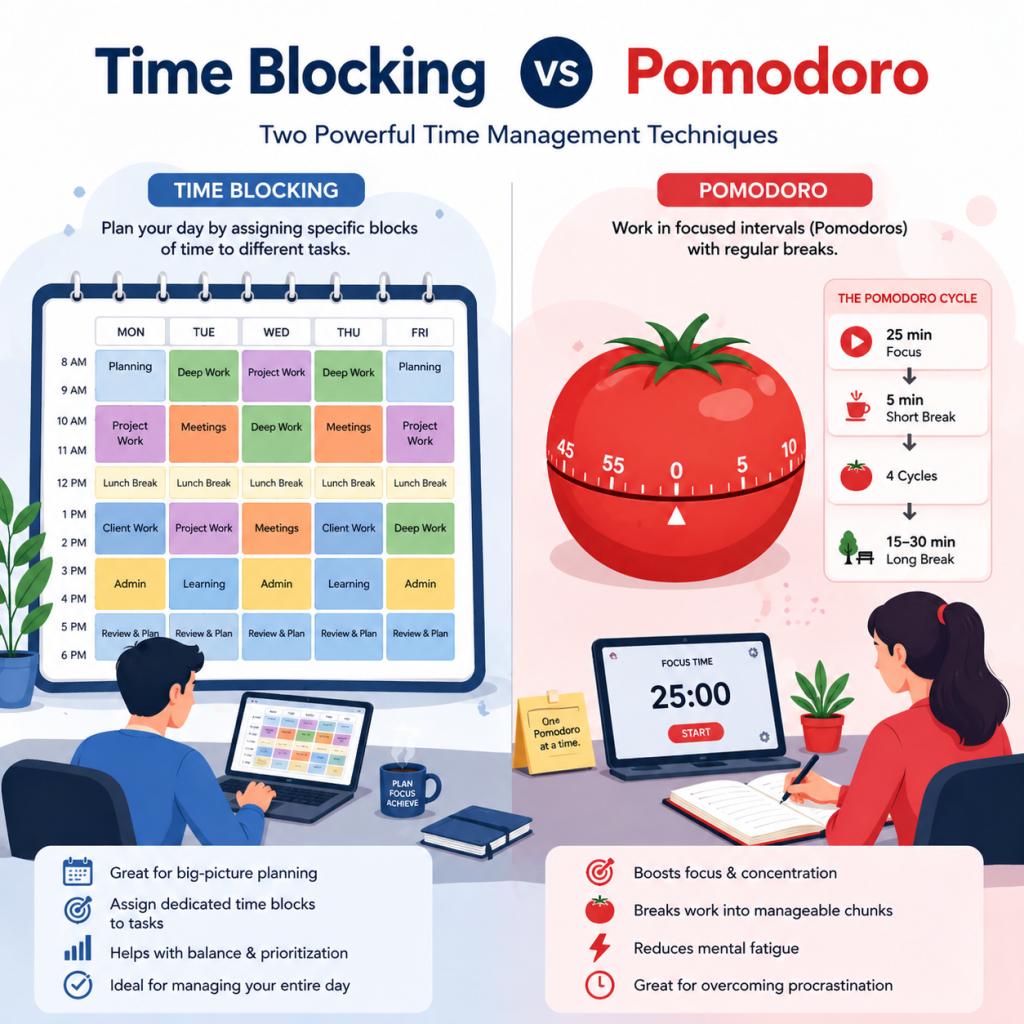
Time blocking is the practice of scheduling specific chunks of your day for specific types of work, protecting those blocks from interruption. It's one of the most direct antidotes to attention residue because it removes the constant micro-decisions about what to work on next, which themselves generate mental switching costs.
When you have a scheduled 90-minute deep work block on your calendar, your brain knows what it's doing for the next 90 minutes. There's no internal debate, no context switching, no residue from deciding. You enter the block, do the work, and exit cleanly.
How to Build an Effective Focus Block
Start with a clear single objective for the block. "Work on project X" is too vague. "Write the methodology section of the Q3 report" is concrete enough for your brain to lock in on. Keep blocks between 60 and 90 minutes for most cognitively demanding tasks, as this aligns with your brain's natural ultradian rhythm cycles. End each block with a brief 5-minute shutdown ritual before moving on.
Pro tip: Schedule your most cognitively demanding deep work blocks in the morning before your inbox and notifications pull you into reactive mode. The residue you carry into deep work from emails and messages is far heavier than the residue from light admin tasks.
3. Batch Similar Tasks Together
Task batching means grouping similar types of work into dedicated time slots rather than scattering them across your day. Instead of checking email whenever a notification arrives, you batch all email into two or three designated windows. Instead of jumping into a quick admin task between deep work, you batch all admin work into a single low-energy block.
The reason this works against attention residue is that similar tasks share overlapping mental sets. When you stay within the same type of cognitive work, the switching cost drops dramatically. Moving from one email to the next requires almost no mental reconfiguration. Moving from a strategic document to an email and back again requires a full mental set switch each time, generating significant residue.
4. Set Communication Windows
Notifications are one of the biggest triggers of attention residue in modern workplaces. Every ping is a micro-interruption that pulls part of your brain away from what you're doing, even if you don't actually stop to respond. Research suggests that just seeing a notification without acting on it is enough to generate measurable attention residue.
The solution is to turn off notifications during deep work and designate specific times for communication. Check Slack at 10 AM, 1 PM, and 4 PM. Read email at the start and end of the day. These windows give you legitimate response times while protecting the cognitive space in between from constant low-level interruption.
5. Finish Before You Switch
Whenever possible, bring a task or a meaningful sub-task to a natural completion point before switching away from it. You don't have to finish the entire project, but finishing a section, a draft, a specific deliverable, or even a clearly bounded thinking session is far better than abandoning work mid-stream.
When you complete a task cleanly, the Zeigarnik Effect works in your favor instead of against you. Your brain can file it as resolved, release the cognitive resources tied up in it, and start the next task with a fuller working memory. Even partial completion, getting a task to a clearly defined stopping point, is significantly better than leaving it in an ambiguous, unresolved state.
6. Take Strategic Brain Breaks
Taking a deliberate break between tasks, even just 5 to 10 minutes, gives your brain time to shed the residue of the previous task before loading up the next one. The key word here is strategic: the break has to be mentally restful, not just physically idle.
A walk, light stretching, a few minutes of slow breathing, or simply sitting quietly without a screen in front of you are all effective. Checking Twitter or scrolling a news feed doesn't count. Those activities introduce their own competing cognitive content, adding to the residue rather than clearing it. The goal is mental whitespace, not entertainment.
7. Design a Low-Distraction Environment
Your physical and digital environment plays a large role in how much attention residue you accumulate throughout the day. A cluttered desk with multiple open applications, ambient notifications, and a door that colleagues freely interrupt is a perfect recipe for constant context switching and spiraling residue.
Design your workspace to default to focus. Use a single-app full-screen mode when deep working. Keep only the tabs relevant to your current task open. Put your phone in another room or face down during deep work blocks. Use noise-cancelling headphones or ambient sound to signal to your brain that it's in deep focus mode. These environmental changes don't require willpower: they make deep focus the path of least resistance.
How clockdiary Helps You Fight Attention Residue
Managing attention residue isn't just about mental habits. It also requires visibility into how your time is actually being spent, and structure that makes deep work the default rather than the exception. That's exactly where clockdiary comes in.
Track Where Your Focus Actually Goes
Most people have a rough idea of how they spend their workday, but the reality often surprises them. clockdiary's time tracking gives you a clear, honest picture of how much time is going to deep focused work versus reactive tasks, admin, and communication. When you can see that 60% of your day is being consumed by context-switching between different task types, you have the data to make a real change.
Tracking your time also creates a closing ritual built into your workflow. Every time you log a task in clockdiary, you're performing a micro-shutdown that signals to your brain: this period of work is done. It's a small act, but it's surprisingly effective at reducing the cognitive bleed between tasks.
Build Deep Work Blocks into Your Schedule
clockdiary's work hours tracker makes it easy to plan and protect dedicated focus time in your day. You can allocate specific blocks to your most important projects, track how faithfully you're sticking to your focus schedule, and identify patterns in when your attention tends to fragment. Over time, this data helps you design a workday that's genuinely structured around deep work rather than one that just hopes for it.
For teams, clockdiary also gives managers visibility into where collective focus is being broken. If your team is spending a disproportionate amount of time in reactive mode, that's an organizational attention residue problem, and fixing it starts with seeing the data clearly.
Frequently Asked Questions
Q: What is attention residue and who discovered it?
Attention residue is the cognitive "leftover" that stays in your brain when you switch from one task to another before fully closing out the previous one. It was first identified and named by Dr. Sophie Leroy, a professor at the University of Washington's Foster School of Business, in a landmark 2009 research paper on the cognitive costs of task switching.
Q: How does attention residue affect productivity?
Attention residue reduces your cognitive capacity on whatever task you switch to, leading to slower work, more errors, lower-quality output, and faster mental fatigue. Research from the American Psychological Association suggests that task switching caused by attention residue can cost up to 40% of your productive time over the course of a workday.
Q: What is the difference between attention residue and distraction?
Distraction is external: a notification, a colleague interrupting, background noise. You can often eliminate distraction by changing your environment. Attention residue is internal: it's generated by your own brain's failure to fully disengage from a previous task. You can be in a completely quiet room with no interruptions and still experience significant attention residue if you switched tasks abruptly or left work unresolved.
Q: How long does attention residue last after switching tasks?
It depends on how abruptly you switched and how unresolved the previous task was. Research suggests it can take anywhere from 9.5 minutes to 23 minutes to fully recover from a task switch or interruption. If you switched mid-task without any closing ritual, the residue tends to last longer and be more disruptive.
Q: Does completing a task before switching help reduce attention residue?
Yes, significantly. Completing a task or reaching a clear, intentional stopping point before switching is one of the most effective ways to reduce attention residue. It closes the "open loop" your brain would otherwise keep processing in the background. If you can't finish the full task, completing a meaningful sub-task and writing down your next action achieves a similar effect.
Q: What is the Zeigarnik Effect and how is it related to attention residue?
The Zeigarnik Effect is a psychological principle showing that the brain remembers and continues to process unfinished tasks more actively than completed ones. It's one of the main neurological drivers of attention residue: when you leave a task incomplete, your brain keeps an active "open loop" for it that competes with whatever you're trying to focus on next.
Q: How can I reduce attention residue at work?
The most effective strategies include: creating a brief shutdown ritual before switching tasks, using time blocking to protect focused work sessions, batching similar tasks together, setting specific communication windows instead of responding to notifications continuously, taking brief mental breaks between major tasks, and designing a low-distraction work environment. Using a time tracker like clockdiary can also help you see exactly where your attention is fragmenting so you can make targeted improvements.
Final Thoughts
Attention residue is one of those productivity problems that most people are already experiencing but haven't yet put a name to. You know the feeling: the mental fog after a meeting, the sluggishness when you try to write after checking email, the frustrating sense that your brain just isn't fully with you even though you're physically at your desk. Now you know what it is, and more importantly, you know how to fight it.
The strategies in this post, shutdown rituals, time blocking, task batching, communication windows, strategic breaks, and a distraction-minimized environment, don't require a radical overhaul of how you work. They require intention. Small, consistent choices about how you transition between tasks compound over time into a significantly more focused, more productive workday.
Start with one thing today. Pick the strategy that feels most immediately relevant to your work pattern, whether that's closing your notifications during a focused block or writing a "next action" note before you switch tasks, and build from there. Your future self will notice the difference.