
Common Productivity Mistakes at Work (And How to Fix Them)
 Kapil Garg |
Updated: April 21, 2026
Kapil Garg |
Updated: April 21, 2026
- Why Productivity Mistakes Matter More Than You Think
- The Most Common Productivity Mistakes at Work
- Mistake 1: Falling for the Multitasking Myth
- Mistake 2: Working Without Clear Priorities
- Mistake 3: Not Tracking Where Your Time Actually Goes
- Mistake 4: Skipping Breaks and Ignoring Energy Levels
- Mistake 5: Letting Meetings Eat Your Day
- Mistake 6: Underestimating Digital Distractions
- Mistake 7: Letting Procrastination Run the Show
- Mistake 8: Refusing to Delegate
- How clockdiary's Activity Tracker Helps You Stop These Mistakes
- Building Better Productivity Habits: A Practical Approach
- Frequently Asked Questions
- Why Productivity Mistakes Matter More Than You Think
- The Most Common Productivity Mistakes at Work
- Mistake 1: Falling for the Multitasking Myth
- Mistake 2: Working Without Clear Priorities
- Mistake 3: Not Tracking Where Your Time Actually Goes
- Mistake 4: Skipping Breaks and Ignoring Energy Levels
- Mistake 5: Letting Meetings Eat Your Day
- Mistake 6: Underestimating Digital Distractions
- Mistake 7: Letting Procrastination Run the Show
- Mistake 8: Refusing to Delegate
- How clockdiary's Activity Tracker Helps You Stop These Mistakes
- Building Better Productivity Habits: A Practical Approach
- Frequently Asked Questions
You wrap up a full day of work, yet your most important task is still sitting untouched. Sound familiar? You're not lazy or disorganized. You're probably making one or more of the common productivity mistakes at work that most professionals don't even realize are costing them hours every single week.
The truth is, productivity rarely breaks down because of a lack of effort. It breaks down because of habits that feel productive but quietly drain your output. Things like switching between tasks constantly, saying yes to every meeting invite, or forgetting to track how you actually spend your time.
In this guide, we'll walk through the most damaging workplace productivity mistakes, why they happen, and what you can do right now to fix them. We'll also show you how tools like clockdiary's Activity Tracker give you the visibility you need to make real, lasting improvements.
Key Takeaways
- Multitasking cuts productivity by up to 40% and increases the number of mistakes you make. Focusing on one task at a time consistently delivers better results.
- Most employees cannot accurately estimate where their time goes. Time-tracking tools reveal the blind spots that planning alone never will.
- Unproductive meetings waste 24 billion hours globally every year. Treating your calendar with the same care as your to-do list is non-negotiable.
- Skipping breaks does not mean more output. Energy management is just as important as time management for sustaining performance throughout the day.
- clockdiary's Activity Tracker captures real-time data on how time is spent across tasks, apps, and projects, helping you spot and fix productivity leaks before they compound.
Why Productivity Mistakes Matter More Than You Think
Most people treat productivity as a personal challenge. You either have it or you don't. But the data tells a very different story. Poor productivity habits aren't just personal inconveniences; they have measurable, costly consequences for individuals and organizations alike.
The Hidden Cost of Lost Hours
Low employee engagement alone cost the global economy $438 billion in lost productivity in 2024, according to Gallup. And that's just one factor. Add in digital distractions, unnecessary meetings, and poor time management, and the numbers become staggering.
On an individual level, the average employee spends only about 4 hours and 12 minutes actively working in an 8-hour day. The rest of the time is lost to distractions, context switching, unnecessary meetings, and other avoidable productivity mistakes. That adds up to hundreds of wasted hours per person every year.
Busyness vs. Productivity: Knowing the Difference
Here's the trap most professionals fall into: they confuse being busy with being productive. Filling your calendar, replying to every message instantly, and attending every meeting creates a feeling of constant activity. But it often produces very little of real value.
True productivity is about doing the right work, at the right time, with the right level of focus. It's not about how many tasks you touch; it's about how much meaningful progress you make. Recognizing this difference is the first step toward fixing the mistakes that hold you back.
Think about it this way: Over the course of a year, the average knowledge worker spends 103 hours in unnecessary meetings, 209 hours on duplicated work, and 352 hours just talking about work. That's nearly 28 full workdays spent on activity with no real output.
The Most Common Productivity Mistakes at Work
Let's get into the specific habits that are quietly sabotaging your output. Some of these will feel obvious once you see them written down. Others might surprise you.
Mistake 1: Falling for the Multitasking Myth
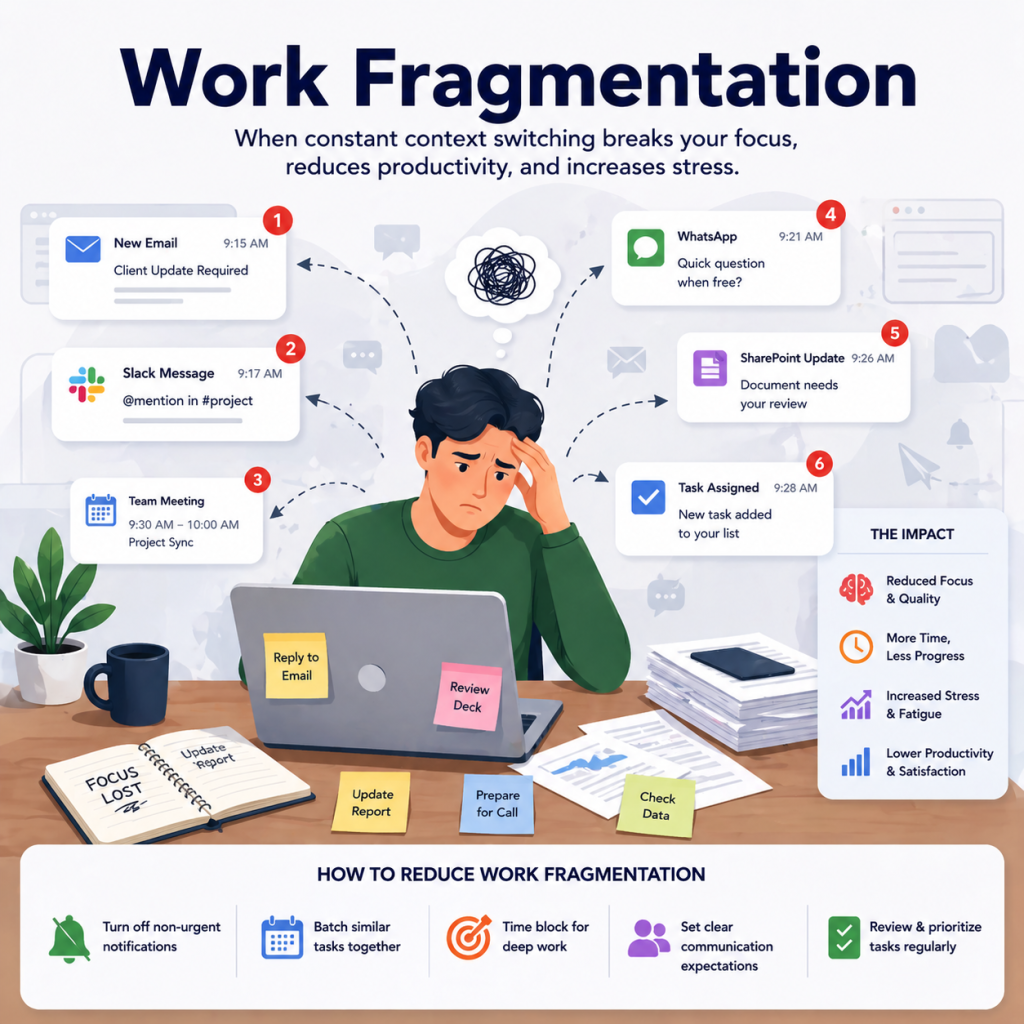
Multitasking feels efficient. You're handling two things at once, so surely you're getting more done, right? Research says otherwise. Switching between tasks doesn't double your output; it splits your focus and drags both tasks out.
Why Multitasking Backfires
Every time you switch tasks, your brain pays what researchers call a "cognitive switching penalty." It takes an average of 23 minutes to regain full focus after a single interruption. Multiply that across a typical workday and you've lost hours before you even realize it.
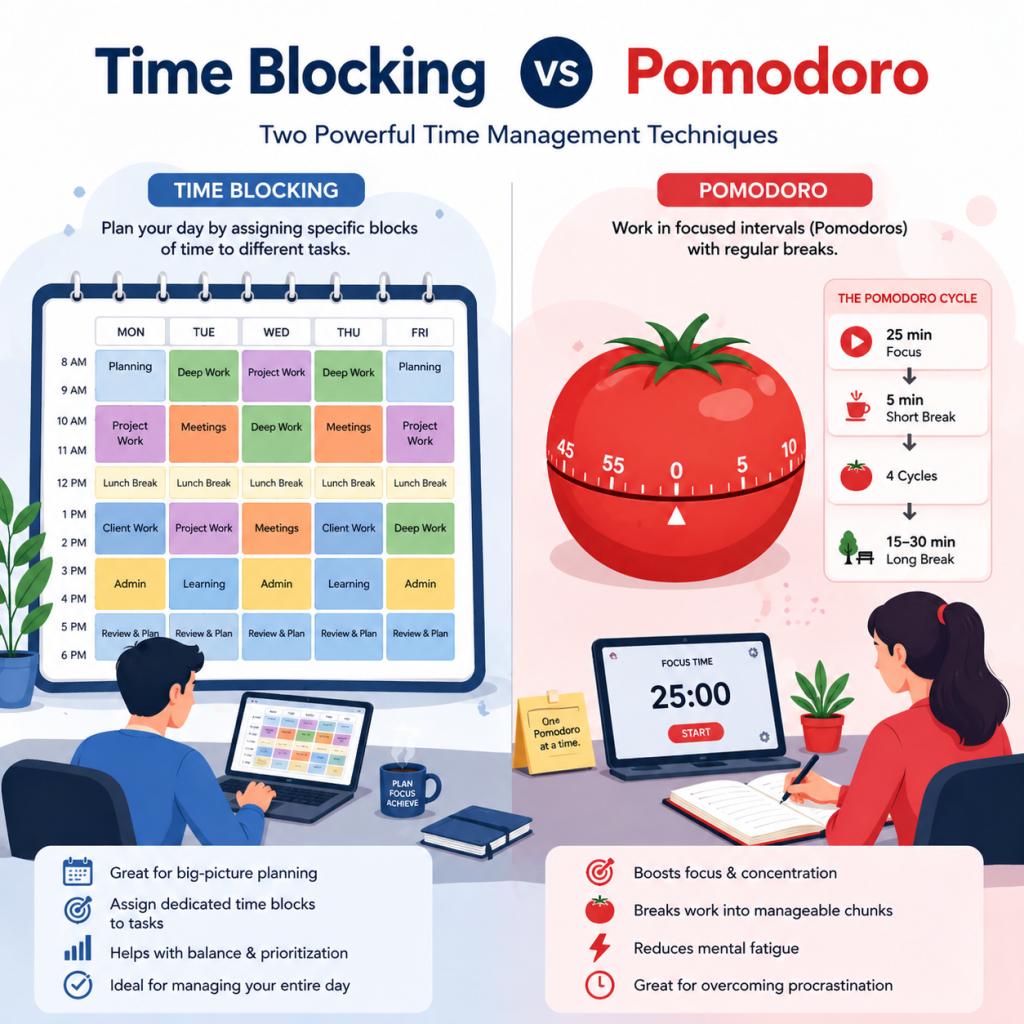
The fix is simple in theory but harder in practice: work on one task at a time. Use time-blocking to assign focused windows to your highest-priority work, and turn off notifications during those blocks. You'll finish tasks faster and with fewer errors.
Mistake 2: Working Without Clear Priorities
Nearly half of American workers don't know what's expected of them at work, according to a widely cited Gallup finding. That's a staggering number, and it leads directly to one of the most damaging productivity mistakes: spending time on tasks that feel important but don't actually move the needle.
How to Set Real Priorities
Not all tasks are created equal. Some are urgent but not important. Some are important but not urgent. Treating everything as equally pressing is a fast track to burnout without meaningful output. A practical framework like the Eisenhower Matrix helps you sort tasks by urgency and importance so you always know what to work on first.
Start each day by identifying the single most important task you need to complete. Make that your first priority before checking email, attending meetings, or handling any reactive work. This one habit alone can dramatically improve your output over time.
Mistake 3: Not Tracking Where Your Time Actually Goes
Most people believe they have a reasonable sense of how they spend their workday. Research consistently shows that belief is wrong. Time perception is notoriously inaccurate, especially for knowledge workers who move between tasks frequently.
Common Time Blind Spots at Work
You likely underestimate how much time you spend on email, low-priority tasks, and informal conversations. These activities feel quick and necessary in the moment, but they accumulate into a significant chunk of your working hours. Without concrete data, you'll keep underestimating them indefinitely.
Time tracking solves this blind spot completely. When you start logging your time against tasks and projects, you get accurate data on where your hours really go. That data is what makes it possible to identify waste, optimize your schedule, and make time tracking a genuine productivity tool rather than just an administrative chore.
Mistake 4: Skipping Breaks and Ignoring Energy Levels
Working through lunch or grinding for six hours straight might feel like discipline. In reality, it's one of the most common productivity mistakes professionals make. Your brain isn't designed for sustained, uninterrupted focus over long periods.
The Role of Recovery in Sustained Output
Research consistently shows that cognitive performance declines significantly after 90 minutes of focused work without a break. Fatigue costs employers an estimated $1,967 per employee annually in lost productivity. When you're exhausted, you make more mistakes, take longer on tasks, and struggle to retain information.
Short, deliberate breaks of 5 to 15 minutes actually improve your output over the course of a full day. Step away from your screen, take a walk, or simply sit quietly. You'll return to work sharper and more focused than if you had pushed through. Managing your energy is just as important as managing your time.
Try this: Schedule two short breaks in your morning and two in your afternoon. Treat them as non-negotiable appointments. Most people find they accomplish more in a day with planned recovery than in one where they try to work non-stop.
Mistake 5: Letting Meetings Eat Your Day
Meetings serve an important purpose, but most organizations have far too many of them. The average employee now spends 11.3 hours per week in meetings, and not all of those meetings are considered productive. That's nearly a third of a 40-hour work week gone before any real work begins.
Reclaiming Time Lost to Unproductive Meetings
Unproductive meetings waste an estimated 24 billion hours globally every year. The problem isn't meetings themselves but poorly planned, poorly run meetings that could have been an email. Every hour you spend in an unnecessary meeting is an hour you're not spending on focused, high-value work.
Before accepting any meeting invite, ask yourself whether your presence is truly necessary. Push back politely when it isn't. When you do run meetings, set a clear agenda in advance, keep them as short as possible, and stick to the schedule. Even small improvements in meeting discipline can free up hours every week.
Mistake 6: Underestimating Digital Distractions
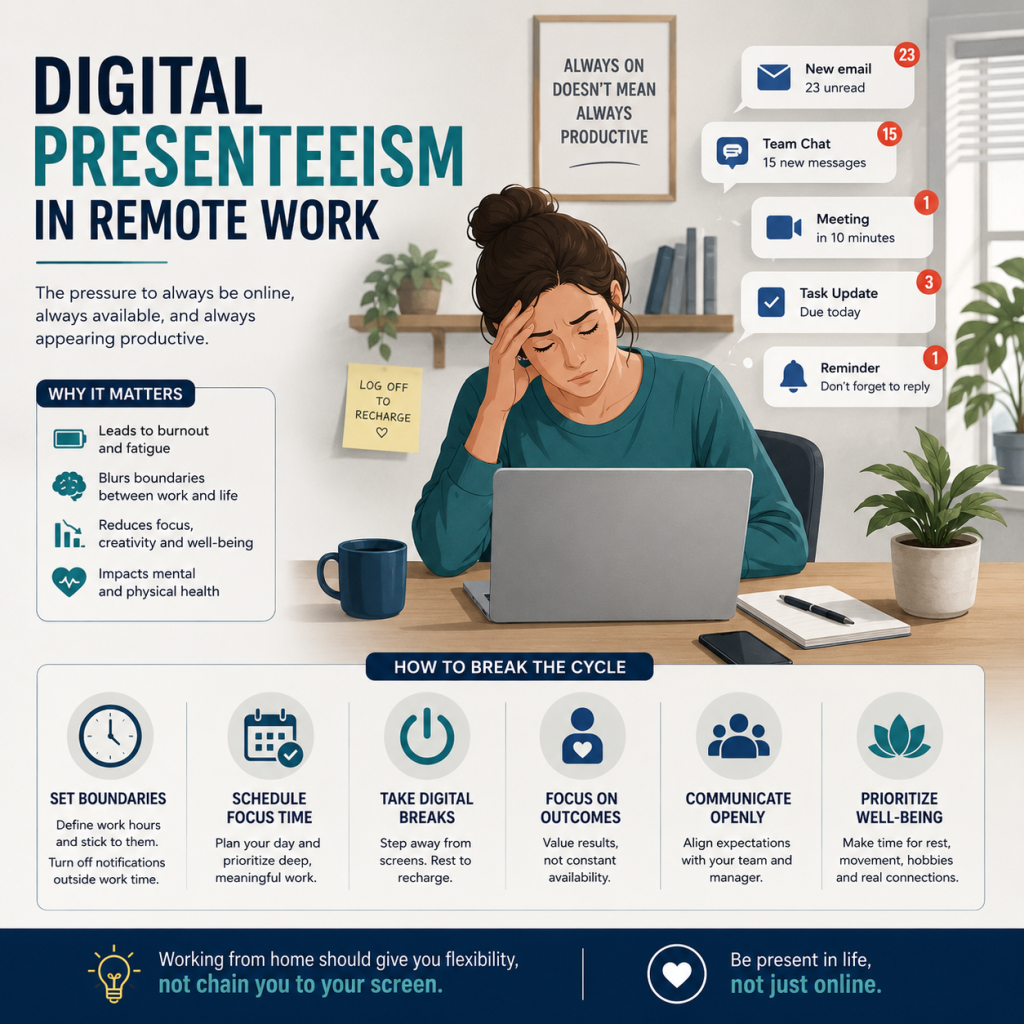
You receive an average of 150 notifications per day across email, messaging apps, and your phone. Each one is a micro-interruption that costs you far more than the few seconds it takes to glance at it. Together, they make sustained, deep work nearly impossible without deliberate countermeasures.
Taking Back Your Focus
Workers spend 2.35 hours daily on social media alone, costing businesses an estimated $28 billion a year. Nearly 90% of working Americans report being distracted at least once daily, with almost one in four interrupted more than six times a day. These aren't minor inconveniences; they're systematic productivity killers.
Start by turning off all non-essential notifications during your focused work blocks. Schedule two or three specific times per day to check email and messages, rather than responding reactively throughout the day. Close unnecessary browser tabs, and if you work in an open office, consider noise-canceling headphones to signal that you're in focus mode.
Mistake 7: Letting Procrastination Run the Show
Procrastination isn't laziness. It's usually a response to anxiety, overwhelm, or a task that feels too large or unclear to begin. The result, however, is the same: important work gets delayed, deadlines get missed, and stress compounds.
Practical Fixes for Chronic Procrastination
One of the most effective fixes is the "two-minute rule." If a task takes less than two minutes, do it now. For larger tasks, break them into the smallest possible steps so you always have a clear, non-intimidating action to take next. Starting is almost always harder than continuing.
Another powerful approach is to identify the single most important task before you finish work each day and make it the very first thing you open the next morning. You'll use your peak cognitive hours on high-value work rather than burning them on easy, low-priority tasks that just feel like progress.
Mistake 8: Refusing to Delegate
Many professionals, especially high achievers, struggle to delegate. The assumption is that it's faster or safer to just do everything yourself. In reality, holding on to every task is one of the most limiting productivity mistakes you can make, both for your own output and for your team's development.
How to Delegate Without Losing Control
Effective delegation starts with identifying tasks that don't require your specific skills or decision-making authority. Hand those off clearly, with context and expected outcomes, but without micromanaging the process. Check in at agreed milestones rather than hovering over every step.
When you free yourself from tasks others can handle, you create space for the high-value work only you can do. That's where your time is most valuable, and that's where it should go.
How clockdiary's Activity Tracker Helps You Stop These Mistakes
Knowing about productivity mistakes is one thing. Having the data to actually see them in your own work is another. That's exactly what clockdiary's Activity Tracker is designed to do.
The Activity Tracker automatically captures screenshots at customizable intervals and monitors the time you spend across different applications, websites, and tasks throughout your workday. It doesn't require manual input or constant attention. It simply runs in the background and builds a clear, honest picture of how your time is really being used.
See Exactly Where Your Time Goes
Most productivity mistakes thrive in the dark. You don't notice how much time email is taking because you're never measuring it. You don't realize how often you switch tasks because it happens automatically. clockdiary's Activity Tracker brings all of that into the light.
The tracker logs your time across projects and tasks automatically, so you always have accurate, timestamped data. You can see exactly how long you spent on a specific project, how much time went to low-priority activities, and where your peak productive hours actually fall during the day.
Spot Patterns and Adjust in Real Time
One of the most powerful things about the Activity Tracker is its ability to reveal patterns you wouldn't spot on your own. Maybe you consistently lose focus in the early afternoon. Maybe a specific type of task always takes twice as long as you estimate. Maybe certain meetings reliably derail your most productive hours.
With clockdiary, these patterns become visible through detailed reports and timeline views. Once you can see them clearly, you can restructure your schedule to protect your high-output hours and reduce the time lost to low-value activities. The AI Smart Screen Insights feature takes this further by analyzing your activity patterns and offering suggestions for better time use.
Keep Teams Accountable Without Micromanaging
For managers, the Activity Tracker solves a persistent challenge: how do you maintain visibility into your team's work without resorting to micromanagement? clockdiary gives you real-time dashboards showing each team member's activity, task progress, and hours logged, all without interrupting them or demanding constant status updates.
This is particularly valuable for remote and hybrid teams, where it's genuinely difficult to know whether work is progressing as expected. The tracker supports multi-screen setups, works across desktop and mobile, and syncs data automatically, so your visibility is always current no matter where your team is working from.
Building Better Productivity Habits: A Practical Approach
Understanding your productivity mistakes is the starting point. Actually fixing them requires a structured approach, not willpower alone. Here's a simple, three-step framework you can start applying this week.
Step 1: Audit Your Workday First
Before you try to change anything, spend one week honestly observing how you work. Use a time tracker like clockdiary to capture what you're actually doing, not what you think you're doing. Note when your focus is sharpest, which tasks take longer than expected, and where interruptions tend to cluster.
-
1
Track Everything for One Full Week
Use clockdiary's Activity Tracker to log all your work without judgment. The goal is data, not perfection. You need an accurate baseline before you can improve on it.
-
2
Review and Identify Your Biggest Leaks
Look at your reports at the end of the week. Where did most of your time go? Which of the eight mistakes from this article show up most clearly in your data? Rank them by impact.
-
3
Map Your Ideal Day Against Your Actual Day
Compare how you want your day to look with how it actually looks. The gap between the two is your productivity improvement opportunity. Start closing that gap, one section at a time.
Step 2: Fix One Mistake at a Time
Trying to fix all eight productivity mistakes at once is itself a productivity mistake. It's overwhelming, and it sets you up to abandon the effort entirely when the inevitable friction kicks in. Pick the single mistake costing you the most time and start there.
Give yourself at least two weeks on each fix before evaluating whether it's working. New habits take time to form and feel natural. You'll likely notice improvements within the first week, but the real benefit comes from sustained consistency over time.
Step 3: Use Tools That Show You the Truth
Intentions are not enough on their own. The professionals who consistently improve their productivity are the ones using tools that give them honest, objective data about their work. clockdiary's work hours tracker and Activity Tracker together give you that data automatically, without adding administrative overhead to your day.
You can track time, monitor task progress, review productivity reports, and identify where your hours are going, all from a single, free platform. The insights you gain from a few weeks of consistent tracking will change how you plan and execute your workday in ways that no productivity article alone can achieve.
Frequently Asked Questions
Q: What are the most common productivity mistakes at work?
The most common productivity mistakes at work include multitasking, working without clear priorities, not tracking time, skipping breaks, allowing too many meetings, getting caught up in digital distractions, procrastinating on important tasks, and refusing to delegate. Most of these mistakes feel harmless or even productive in the moment, which is what makes them so damaging over time.
Q: How does multitasking reduce productivity?
Multitasking reduces productivity because the human brain cannot genuinely focus on two complex tasks at once. What feels like multitasking is actually rapid switching between tasks, and each switch comes with a cognitive cost. Research shows that task-switching can reduce productivity by up to 40% and increase the number of mistakes you make. It also takes an average of 23 minutes to fully regain focus after each interruption.
Q: Why is time tracking important for productivity?
Time tracking is important because most people significantly misjudge how they spend their working hours. Without data, you can't identify where time is being wasted, which tasks are taking longer than they should, or when your peak focus periods are. Accurate time data from tools like clockdiary's Activity Tracker gives you the insight needed to plan smarter, prioritize better, and eliminate inefficiencies you wouldn't otherwise notice.
Q: How can I stop procrastinating at work?
To reduce procrastination at work, start by breaking large tasks into the smallest possible next steps so they feel manageable. Use the two-minute rule: if a task takes under two minutes, do it immediately. Identify your most important task the evening before and make it your first action the next morning, before checking email or messages. Tracking your time also helps, as seeing exactly how long you spend avoiding a task often provides enough motivation to start.
Q: How many productive hours does the average employee actually work per day?
Research suggests the average employee spends only around 4 hours and 12 minutes on active, focused work in a typical 8-hour workday. The rest of the time is consumed by meetings, email, low-priority tasks, and distractions. This doesn't mean employees aren't working hard; it means a significant portion of the workday is filled with activity that doesn't produce meaningful output.
Q: What is clockdiary's Activity Tracker and how does it help with productivity?
clockdiary's Activity Tracker is a feature that automatically monitors time spent across applications, tasks, and projects during the workday. It captures screenshots at customizable intervals, builds detailed activity logs, and generates reports that show exactly where your hours are going. For individuals, it reveals time blind spots and helps you build more accurate, realistic schedules. For managers, it provides team-wide visibility without requiring constant check-ins or disruptive interruptions.
Q: How do I reduce the impact of meetings on my productivity?
To reduce the impact of meetings on your productivity, start by evaluating whether your attendance at each meeting is truly necessary. Decline meetings where your input isn't required. When you do run meetings, prepare a clear agenda, set a time limit, and stick to it. Blocking off "no meeting" windows in your calendar to protect your focused work time is also highly effective, especially during your peak cognitive hours in the morning.