
10 Best Basecamp Alternatives for Project Management in 2025
 Kapil Garg |
Updated: April 6, 2026
Kapil Garg |
Updated: April 6, 2026
- What Is Basecamp?
- What to Look for in an Alternative
- 10 Best Basecamp Alternatives in 2026
- Quick Comparison Table
- How to Choose the Right Tool
- How clockdiary Helps Teams That Have Outgrown Basecamp
- FAQ
- Final Thoughts
If you've been using Basecamp for a while, you already know it's great for keeping conversations and files in one place. But the moment your team starts growing, juggling client deadlines, or needing to track billable hours, Basecamp's limitations become pretty hard to ignore. You can't track time natively, there are no Gantt charts, and the reporting tools are thin at best.
The good news is that there are plenty of Basecamp alternatives built for exactly this situation. Whether you need a smarter project time tracker, better task views, or a tool that scales with your team, this guide covers the 10 best options available right now. We'll break down who each tool is best for and help you figure out which one fits your workflow.
- Basecamp lacks built-in time tracking, Gantt charts, task dependencies, and advanced reporting features that modern teams need.
- clockdiary is the top pick for teams that want time tracking, project management, and employee monitoring in one affordable tool.
- Tools like ClickUp and Asana are strong all-rounders, while Trello suits small teams and Jira targets software development workflows.
- The project management software market is growing at a 15.65% CAGR, reflecting how quickly teams are demanding more powerful alternatives.
- The right Basecamp alternative depends on your team size, work style (remote vs. in-office), and whether you bill clients by the hour.
What Is Basecamp and Why Do Teams Look for Alternatives?
Basecamp has been around since 2004, making it one of the oldest project management tools on the market. It was built on a simple idea: give teams one central place to share files, post messages, and track to-dos. For a long time, that simplicity was a genuine selling point. It kept things uncluttered and easy to adopt.
But project management has evolved significantly since then. Teams are bigger, projects are more complex, remote work is the norm, and clients expect real-time visibility. Basecamp hasn't kept up with all of those shifts, which is why so many teams find themselves searching for something better.
What Basecamp Does Well
To be fair, Basecamp still has some things going for it. Its message boards and Campfire chat keep client and team communication centralized. The Automatic Check-ins feature replaces status meetings with async updates. And the flat-fee pricing model is straightforward, with no per-user surprises as your headcount grows.
If your team only needs a shared inbox and simple task lists, Basecamp gets the job done without overwhelming anyone with features they won't use.
Common Limitations That Push Teams Away
Where Basecamp really struggles is depth. There's no native time tracking, no Gantt chart view, no task dependencies, and very limited reporting. You can't set recurring tasks, you can't track billable hours without a third-party add-on, and the integrations list is thin compared to most modern tools. Teams managing multiple clients or running complex workflows will hit these walls fast.
What to Look for in a Basecamp Alternative
Switching tools is a big decision, so it helps to know what you actually need before you start comparing options. Here are the three most important things to evaluate when looking at Basecamp alternatives.
Time Tracking and Reporting
This is the number one gap teams report when leaving Basecamp. If your team tracks billable hours, logs time per project, or needs payroll-ready timesheets, you need a tool with built-in time tracking. Look for a solution where team members can start a timer directly on a task rather than having to log hours separately in another app. Reporting should show you how time is distributed across projects, clients, and team members without requiring an export to a spreadsheet.
Project Views and Flexibility
Basecamp only gives you a list-based view of tasks. Most modern tools offer Kanban boards, Gantt charts, calendar views, and timeline views. Different team members prefer different formats, and different project types benefit from different structures. A good Basecamp alternative lets you switch views without losing data or having to rebuild anything.
Integrations and Scalability
Your project management tool doesn't live in a vacuum. It needs to connect with your communication tools, storage apps, payroll systems, and CRM. Before committing to a platform, check how well it integrates with the tools your team already uses. Also think about what you'll need 12 months from now. A tool that's perfect for 10 people might become clunky when you hit 50.
10 Best Basecamp Alternatives in 2026
Here are the top tools replacing Basecamp across different team sizes, industries, and use cases. Each one addresses something that Basecamp doesn't do well.
1. clockdiary
Best for: Teams that need time tracking, project management, and employee monitoring in one tool.
clockdiary is the most practical Basecamp alternative for teams that do real work and need to prove it. Where Basecamp leaves you needing a separate time tracker, a separate monitoring tool, and a separate timesheet app, clockdiary brings everything into one clean workspace. You can assign tasks, track how long they take, monitor employee activity, and generate timesheets without ever leaving the platform.
For remote teams especially, this matters. You get screenshot-based activity monitoring, real-time work-hours tracking, and attendance logs that integrate with your payroll process. It's the kind of visibility that Basecamp simply doesn't offer. And unlike some of the enterprise-heavy options on this list, clockdiary is priced to be accessible whether you have 5 people or 500.
Key features: Built-in time tracking with manual and timer modes, employee monitoring with screenshots, attendance and leave management, project-level time reports, billable hours tracking, payroll-ready timesheets, and a work hours tracker that keeps your team accountable.
Pricing: Affordable plans for all team sizes. See pricing or start a free trial.
Why clockdiary beats Basecamp for time-conscious teams. Basecamp's only time-tracking option is a paid add-on where you manually log hours. clockdiary gives you a native timer on every task, automated attendance records, and payroll-ready reports out of the box.
2. ClickUp
Best for: Teams that want an all-in-one platform with deep customization.
ClickUp is one of the most feature-rich project management tools available. It offers 15+ project views including List, Kanban, Gantt, Calendar, and Timeline. You can create custom dashboards, automate repetitive tasks with 50+ triggers, and use 100+ templates for different team workflows. ClickUp also has built-in time tracking, goal tracking, and workload management.
The tradeoff is complexity. New users often need time to configure ClickUp to their workflow, and the sheer number of options can feel overwhelming at first. But for teams that need flexibility and are willing to invest in setup, ClickUp delivers extraordinary value. It holds a combined 4.6/5 rating across G2, Capterra, and GetApp based on 18,000+ reviews.
Key features: 15+ project views, native time tracking, automation, 100+ templates, goal tracking, workload management, and a generous free plan.
Pricing: Free plan available; paid plans start at $7/user/month.
3. Asana
Best for: Mid-size teams that need structured task management with workflow automation.
Asana is a purpose-built work management platform that excels at keeping teams organized across complex, multi-step projects. It supports task dependencies, subtasks, custom fields, and multiple views including List, Board, Timeline, and Calendar. Its workflow automation builder is one of the cleanest in the market, letting you trigger actions based on task status changes or due date conditions.
Asana doesn't include native time tracking, but it integrates with tools like Harvest and Toggl if you need it. It holds a 4.5/5 combined rating based on 35,000+ reviews. It's a strong upgrade from Basecamp for teams that want more structured task management without losing usability.
Key features: Task dependencies, subtasks, timeline view, workflow automation, portfolio management, and advanced reporting.
Pricing: Free plan for up to 15 users; paid plans start at $10.99/user/month.
4. Monday.com
Best for: Teams that want visual project boards and flexible workflows.
Monday.com positions itself as a work operating system rather than just a project management tool. Its visual board interface is intuitive and easy to adopt, and it supports everything from Kanban views to Gantt timelines. You can assign tasks, track deadlines, set automations, and build custom dashboards without a steep learning curve.
One thing to watch is pricing. Monday.com can get expensive as your team grows and you start unlocking higher-tier features. But for teams coming from Basecamp's flat structure, the visual clarity Monday.com offers is a significant step up.
Key features: Visual boards, timeline and Gantt views, automation, dashboards, 200+ templates, and integrations with 200+ apps.
Pricing: Free plan for up to 2 users; paid plans start at $9/user/month.
5. Trello
Best for: Small teams that want simple, card-based task management.
Trello is the go-to tool for teams that want something visual and easy without a lot of configuration. Its drag-and-drop Kanban boards make it simple to see what's in progress, what's done, and what's coming next. You can attach files, set due dates, and leave comments directly on cards.
Trello's main limitation is that it's not built for complex projects. It doesn't have Gantt charts, time tracking, or resource planning out of the box. You can add some of these through Power-Ups, but that adds cost and complexity. It's an excellent Basecamp replacement for small teams that just need cleaner task boards.
Key features: Kanban boards, Power-Ups ecosystem, drag-and-drop interface, checklists, due dates, and file attachments.
Pricing: Free plan available; paid plans start at $5/user/month.
6. Jira
Best for: Software development and engineering teams using agile methodologies.
Jira is built specifically for technical teams that run sprints, manage backlogs, and track bugs. It supports Scrum and Kanban boards natively, integrates with GitHub, Bitbucket, and CI/CD tools, and offers deep issue-tracking capabilities that no other tool on this list can match for developers.
If your team isn't in software development, Jira will feel overly complex and hard to configure. But for engineering teams that need agile tooling, Jira is the definitive choice. Its free plan supports up to 10 users, making it accessible for small dev teams.
Key features: Scrum and Kanban boards, sprint planning, backlog management, roadmap views, GitHub/Bitbucket integration, and issue tracking.
Pricing: Free for up to 10 users; paid plans start at $7.75/user/month.
7. Wrike
Best for: Cross-functional teams and marketing departments that need advanced reporting.
Wrike offers a strong combination of task management, resource planning, and reporting. It includes Gantt charts, time tracking, a self-learning automation engine, and custom dashboards with live data. Its approval workflows make it particularly popular with creative and marketing teams that need structured review processes.
Wrike's interface takes some getting used to, and the advanced features are locked behind higher-tier plans. But for teams that have genuinely outgrown Basecamp's simple setup, Wrike offers a level of structure and visibility that's hard to match. Paid plans start at $9.80/user/month.
Key features: Gantt charts, time tracking, resource planning, approval workflows, custom dashboards, and AI automation.
Pricing: Free plan available; paid plans from $9.80/user/month.
8. Zoho Projects
Best for: Budget-conscious teams that need dependencies, automation, and Gantt charts.
Zoho Projects is one of the best value-for-money options on this list. It includes Gantt charts, task dependencies, time tracking, automation, and built-in reporting at a price point significantly lower than most competitors. If you're already using other Zoho tools like Zoho CRM or Zoho Books, the native integrations make it an obvious choice.
Zoho Projects also allows direct migration from Basecamp, which removes one of the biggest friction points in switching tools. It's not the most polished interface, but the functionality is solid across all plan tiers.
Key features: Gantt charts, task dependencies, time tracking, automation, Basecamp migration tool, and Zoho ecosystem integrations.
Pricing: Free plan available; paid plans start at $4/user/month.
9. Teamwork
Best for: Client-service teams and agencies that bill by the hour.
Teamwork is designed for agencies and professional services firms. It includes built-in time tracking, invoicing, retainer management, and client portals. You can log hours directly on tasks, pull time reports by client or project, and generate invoices without leaving the platform. It's a step up from Basecamp that actually closes the billing loop.
Teamwork holds a 4.4/5 combined rating based on 1,800+ reviews. Its free plan supports up to 5 users, and paid plans give you the resource management and capacity planning tools that service teams need to run profitable projects.
Key features: Time tracking, invoicing, client portals, retainer tracking, Gantt charts, and resource management.
Pricing: Free for up to 5 users; paid plans start at $9.99/user/month.
10. Notion
Best for: Teams that want a flexible knowledge base and project workspace combined.
Notion blurs the line between project management and documentation. You can build custom databases, create project wikis, manage tasks in table or board view, and embed files, videos, and other content blocks. It's enormously flexible, which makes it popular with teams that don't fit neatly into a traditional project management structure.
The tradeoff is that Notion requires more setup and configuration than most tools on this list. It also lacks native time tracking and resource management. But for teams that want a single source of truth for both documentation and task management, it's a compelling choice. Notion offers a free plan for individuals and small teams.
Key features: Custom databases, wiki and documentation, kanban and table views, templates, and collaborative pages.
Pricing: Free for individuals; paid plans start at $10/user/month.
Basecamp vs Alternatives: Quick Comparison Table
Here's a side-by-side look at how these tools stack up against Basecamp across the features that matter most.
| Tool | Time Tracking | Gantt Chart | Free Plan | Best For | Starting Price |
|---|---|---|---|---|---|
| clockdiary | Yes | Yes | Yes | Time tracking + team monitoring | Affordable / see pricing |
| Basecamp | Add-on only | No | No | Simple communication | $15/user/mo |
| ClickUp | Yes | Yes | Yes | All-in-one customization | $7/user/mo |
| Asana | Via integration | Yes | Yes | Structured task management | $10.99/user/mo |
| Monday.com | Yes | Yes | Yes | Visual project boards | $9/user/mo |
| Trello | Via Power-Up | Via Power-Up | Yes | Simple Kanban boards | $5/user/mo |
| Jira | Yes | Yes | Yes (10 users) | Agile dev teams | $7.75/user/mo |
| Wrike | Yes | Yes | Yes | Cross-functional reporting | $9.80/user/mo |
| Zoho Projects | Yes | Yes | Yes | Budget-conscious teams | $4/user/mo |
| Teamwork | Yes | Yes | Yes (5 users) | Client billing and agencies | $9.99/user/mo |
| Notion | No | No | Yes | Docs + task management | $10/user/mo |
How to Choose the Right Basecamp Alternative for Your Team
Every team is different, so the "best" tool depends entirely on what you need. Here's how to narrow it down based on your situation.
For Small Teams
If you have a team of fewer than 15 people and your projects are relatively straightforward, you don't need enterprise-level complexity. Trello is a great starting point if you just want cleaner task boards. clockdiary is the better pick if you also need to track time, since it handles both task management and time logging without charging you for add-ons or separate subscriptions.
For Remote Teams
Remote teams need more than task lists. You need to know who's working, when they're online, and whether projects are on track without relying on constant check-in messages. clockdiary's remote employee monitoring features give you real-time visibility into your distributed team's activity, attendance, and productivity. For the communication side, tools like ClickUp and Monday.com layer in comment threads and mention-based notifications that keep remote conversations connected to the work itself.
Whatever you choose, make sure it works well asynchronously. Remote teams often span multiple time zones, so your tool needs to support async updates without breaking the context of ongoing work.
For Teams That Bill by the Hour
If you're a freelancer, agency, or consulting firm, your project management tool needs to close the loop between the work done and the invoice sent. That means built-in time tracking, billable hour categorization, and ideally invoicing or export-to-payroll features. clockdiary handles all of this with its timesheet app and billing-ready time reports. Teamwork is also a strong option if you need a dedicated client portal alongside the billing tools.
How clockdiary Helps Teams That Have Outgrown Basecamp
Most Basecamp alternatives solve one or two of Basecamp's gaps. clockdiary solves all of them at once. Here's what you get when you make the switch.
Built-in Time Tracking for Every Project
clockdiary lets your team start a timer directly from any task. Hours are automatically logged against the right project, and you can see time breakdowns by person, project, or date range in real time. No more manually entering hours at the end of the day, no more lost billable time, and no more paying extra for a separate time tracking add-on.
You also get billable vs. non-billable hour separation built in, so your reports are client-ready without any cleanup. For teams that run payroll based on logged hours, clockdiary's timesheet export makes that process fast and accurate.
Employee Monitoring for Remote Teams
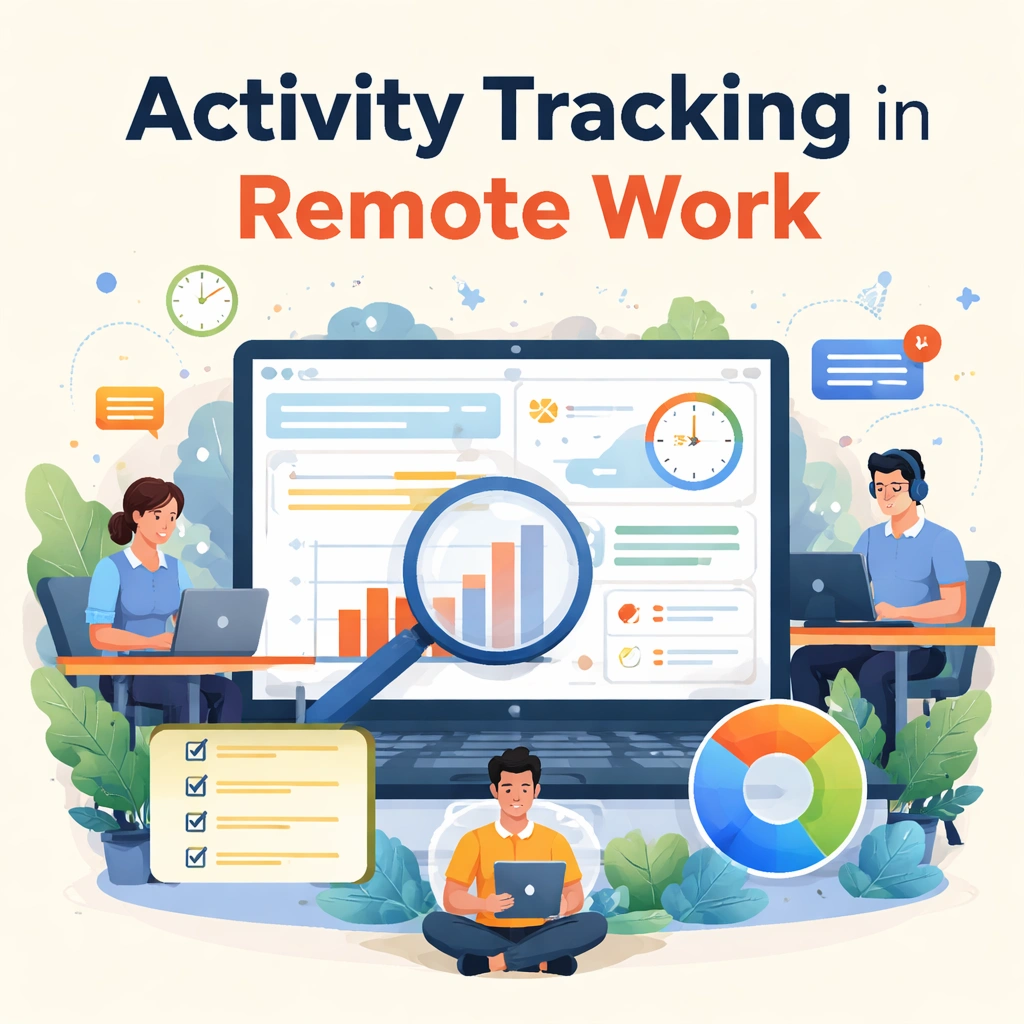
clockdiary's employee monitoring goes beyond simple time logging. You get optional screenshot capture at set intervals, activity tracking showing which apps and sites are in use, and real-time attendance records that show who clocked in, when they started, and how long they've been active. This level of visibility is something Basecamp was never designed to provide, and for remote-first teams, it changes how managers stay connected to their team's actual output.
You can also set up automatic check-in reminders, track leave and absences, and pull employee utilization reports that help you spot capacity issues before they become project problems.
Simple Pricing, No Hidden Fees
One of the most common complaints about Basecamp alternatives is that the pricing looks good on the surface but adds up fast when you include the features you actually need. clockdiary keeps things simple. You get time tracking, project management, and monitoring tools without needing to upgrade to a separate plan for each. See clockdiary pricing to find the plan that fits your team size.
Frequently Asked Questions
What is the best free alternative to Basecamp?
clockdiary, ClickUp, Trello, and Asana all offer free plans. ClickUp's free plan is particularly generous, with unlimited tasks and multiple project views. clockdiary is the best free option for teams that also need time tracking built in.
Does Basecamp have a time tracking feature?
Basecamp does not include native time tracking. It offers a paid add-on called Basecamp Time that requires manual hour entry. Most Basecamp alternatives, including clockdiary, include built-in time tracking as a core feature at no extra cost.
Which Basecamp alternative is best for remote teams?
clockdiary is the strongest pick for remote teams because it combines task management with real-time employee monitoring, attendance tracking, and activity reports. ClickUp and Monday.com are also strong for remote collaboration, especially for teams that need rich communication features alongside task management.
Can I migrate my data from Basecamp to another tool?
Many Basecamp alternatives support data migration. Zoho Projects offers a direct Basecamp migration tool. ClickUp and Asana also provide import options. You should check the migration documentation for your chosen tool before committing, and run a test import with a single project first.
Which Basecamp alternative is best for agencies?
clockdiary and Teamwork are the top picks for agencies. clockdiary gives you time tracking, billing-ready timesheets, and employee monitoring. Teamwork adds client portals, invoicing, and retainer management. Both are designed for teams that bill by the hour and need clear project profitability reporting.
Is Basecamp still worth using in 2026?
Basecamp can still work for very small teams with simple collaboration needs. But if your team needs time tracking, Gantt charts, task dependencies, or detailed reporting, Basecamp will limit you. The alternatives in this guide all offer more capability at competitive price points.
What are the main reasons to switch from Basecamp?
The most common reasons are the lack of built-in time tracking, absence of Gantt charts, limited task management features like dependencies and subtasks, weak reporting tools, and limited integrations. Teams also switch when they outgrow Basecamp's flat-fee pricing structure as their headcount and complexity grow.
Final Thoughts
Basecamp did something important when it launched: it proved that project management didn't have to be complicated. But two decades later, what counted as "simple" then is now just "limited." Teams need time tracking, multiple project views, resource planning, and better reporting to stay competitive.
If you're looking for the Basecamp alternative that covers the most ground without adding unnecessary complexity, clockdiary is the place to start. It gives your team native time tracking, project management, employee monitoring, and payroll-ready timesheets in a single platform built for the way modern teams actually work. Whether you're running a remote team, managing client billing, or just trying to get better visibility into where your hours go, clockdiary has you covered.
Start your free trial today and see how much easier project management gets when time tracking is built right in.