Managing time well is not about doing more work every day. It is about focusing on the tasks that actually matter. Many people stay busy all day but still feel like they didn’t make real progress. Their to-do lists are long, their calendars are full, and yet important work keeps getting pushed to tomorrow.
One of the biggest reasons for this problem is poor prioritization. When every task feels urgent, it becomes hard to decide what to work on first. As a result, people often spend too much time on small or low-impact tasks while important responsibilities are delayed. Over time, this leads to stress, missed deadlines, and frustration.
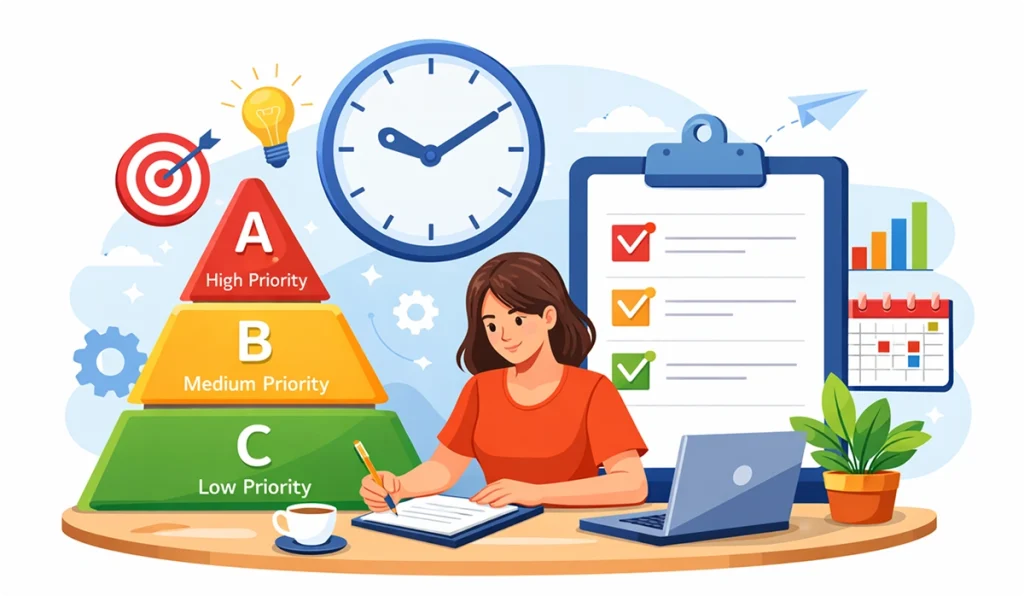
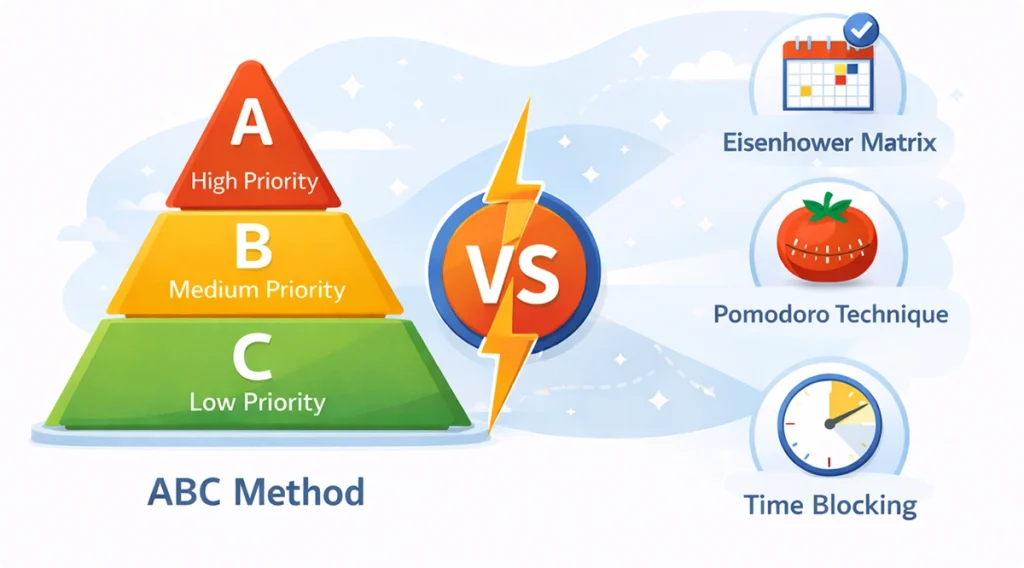
The ABC method of time management is a simple way to fix this problem. It helps you organize tasks based on their importance instead of treating everything the same. With this method, tasks are grouped into three clear categories. Some tasks are critical and must be done first. Others are important but can wait. And some tasks are optional and should not take up too much of your time.
What makes the ABC method effective is its simplicity. You don’t need complex tools or detailed planning systems to get started. When used alongside basic time management practices, it helps you focus on what truly deserves your attention and energy each day.
In this guide, you’ll learn what the ABC method is, how A, B, and C tasks work, and how to apply the method in real-life situations. We’ll also cover examples, common mistakes, and tips for using the ABC method as part of your daily routine. By the end, you’ll have a clear and practical way to prioritize tasks and manage your time with more confidence.
What Is the ABC Method in Time Management?
The ABC method is a simple time management technique used to prioritize tasks based on importance. Instead of treating every task on your to-do list the same, it helps you focus on what truly matters first.
At its core, the ABC method works by grouping tasks into three clear categories based on priority. This structure removes confusion and makes planning easier.
The ABC method helps you:
Decide which tasks need immediate attention
Reduce time spent on low-value activities
Stay focused on work that has the biggest impact
One of the biggest advantages of the ABC method is clarity. When everything feels urgent, decision-making becomes stressful. This method gives you a clear order of importance so you always know what to work on next.
The ABC method is also flexible and easy to use. You can apply it to daily task planning, weekly goals, or long-term projects without using complex systems or tools.
Today, many people work in digital work environments, where emails, meetings, and constant notifications compete for attention. In such situations, the ABC method helps protect time for important tasks and prevents low-priority work from taking over the day.
In short, the ABC method encourages better decisions, reduces wasted time, and makes task planning more manageable.
What Does ABC Stand For in Time Management?
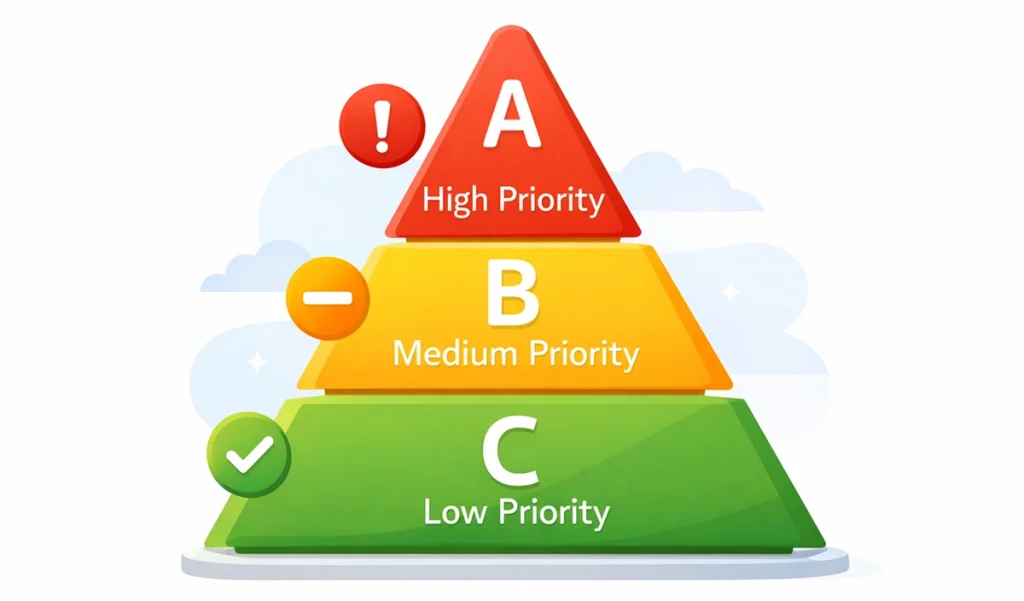
In the ABC method, every task is placed into one of three priority categories: A, B, or C. These letters help you quickly understand which tasks matter the most and which tasks can wait. The goal is not to do everything, but to focus your time and energy on the right tasks.
Each letter represents a different level of importance. Once you understand what A, B, and C tasks mean, it becomes much easier to plan your day and make better decisions about how you spend your time.
A Tasks – Critical and High-Priority Work
A tasks are the most important tasks on your list. These tasks have serious consequences if they are delayed or not completed on time. They usually have a direct impact on your goals, responsibilities, or deadlines.
A tasks usually:
Are urgent and important
Affect major outcomes or results
Cannot be ignored without consequences
Examples of A tasks include meeting a deadline, preparing for an important presentation, or completing work that directly affects your role. These tasks should always be completed first. If you struggle to start important work, learning how to overcome procrastination can make it easier to take action on A tasks.
B Tasks – Important but Less Urgent Work
B tasks are important, but they are not as urgent as A tasks. These tasks still matter, but delaying them does not cause immediate problems. However, ignoring them for too long can turn them into A tasks later.
B tasks usually:
Support long-term goals
Improve progress over time
Can be scheduled after A tasks
Examples include planning, skill development, or follow-up work. To stay consistent with long-term priorities, many people use goal tracking apps to measure progress and stay on track.
C Tasks – Low-Priority and Optional Work
C tasks are the lowest priority tasks. These activities have little to no impact on your goals. While they may feel productive, they often consume time without delivering real value.
C tasks usually:
Are optional or non-essential
Have no real consequences if skipped
Can easily fill your day if not controlled
Examples include unnecessary meetings, casual browsing, or organizing things that don’t need immediate attention. One simple way to control C tasks is task batching, where you group small low-priority tasks together and handle them in one block.
Examples of the ABC Method of Time Management
The ABC method is easy to understand, but it becomes much easier to use when you see real examples. Below are three practical scenarios showing how the ABC method works for personal planning, daily work, and team priorities. The goal is simple: make sure your most important tasks get done before low-value tasks take over your time.
A good rule to remember is this: A tasks protect your results, B tasks protect your growth, and C tasks protect your comfort. When you label tasks clearly, you stop guessing what to do next and start working with a plan.
Personal Daily Task List Example
Imagine you are planning your day and you write down this task list:
Finish an important work report
Pay the electricity bill
Reply to 12 emails
Book a doctor appointment
Clean your workspace
Scroll social media
Watch a random video on YouTube
Now apply the ABC method:
A tasks:
Finish an important work report
Pay the electricity bill
B tasks:
Reply to 12 emails
Book a doctor appointment
Clean your workspace
C tasks:
Scroll social media
Watch a random video on YouTube
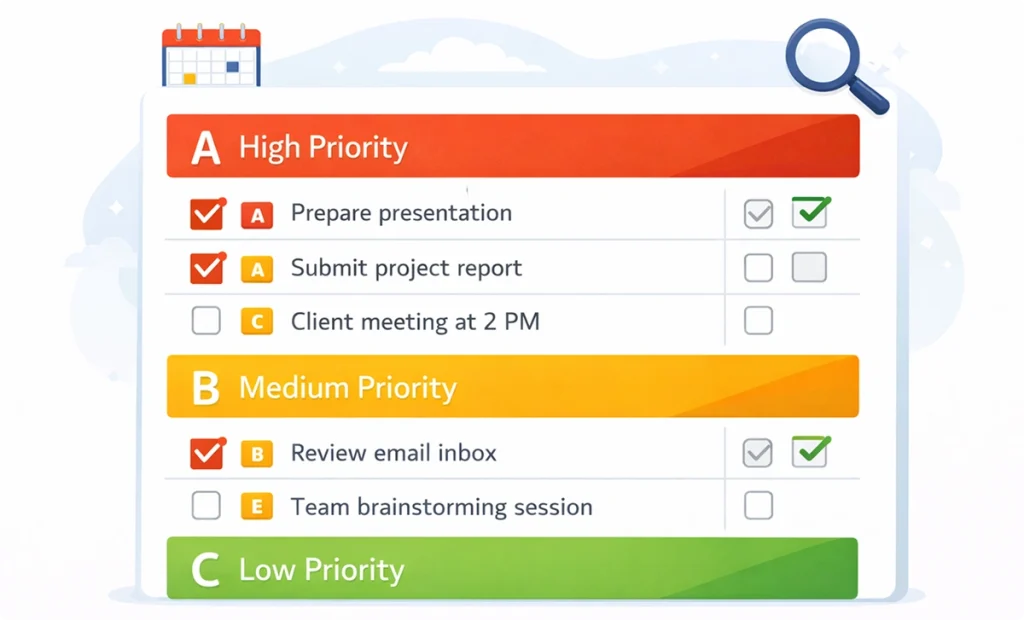
This structure helps you avoid starting the day with easy, low-impact tasks. You begin with work that has real consequences if delayed. If you already use daily planner templates, you can simply add A, B, and C labels next to each task and follow the order.
Professional Workday Prioritization Example
Now consider a typical workday for someone managing multiple responsibilities:
Prepare slides for a client meeting at 3 PM
Attend a 15-minute team check-in
Review a report from the finance team
Respond to Slack messages
Organize files and folders
Check notifications frequently
Read an industry newsletter
Use the ABC method like this:
A tasks:
Prepare slides for a client meeting at 3 PM
B tasks:
Attend a 15-minute team check-in
Review a report from the finance team
Respond to Slack messages
C tasks:
Organize files and folders
Check notifications frequently
Read an industry newsletter
The key lesson is that not everything “work-related” is important. A client meeting has a clear deadline and high impact, so it comes first. Emails and messages may be important, but they should not interrupt deep work all day. Many professionals also follow time tracking tips to understand how long tasks take and to reduce time spent on distractions.
Team-Based ABC Method Example
The ABC method also works well for teams because it creates shared clarity. Here is an example of a team planning weekly priorities:
Deliver a project milestone by Friday
Fix two high-priority bugs
Conduct internal training for new hires
Update documentation
Schedule optional brainstorming sessions
Improve a nice-to-have dashboard feature
Organize the tasks like this:
A tasks:
Deliver a project milestone by Friday
Fix two high-priority bugs
B tasks:
Conduct internal training for new hires
Update documentation
C tasks:
Schedule optional brainstorming sessions
Improve a nice-to-have dashboard feature
This helps the team protect deadlines and focus on work that affects customers or key outcomes. It also reduces confusion during the week because everyone knows what matters most. Teams that focus on improving team productivity often use simple prioritization methods like ABC to keep work aligned and reduce low-impact tasks.
Why the ABC Method Improves Time Management
The main reason the ABC method works so well is that it helps you focus on what truly matters instead of reacting to everything around you. Many people struggle with time management not because they lack discipline, but because they don’t have a clear system to decide what deserves attention first.
The ABC method improves time management by bringing structure and clarity to your daily tasks.
Clear Task Prioritization
One of the biggest problems with traditional to-do lists is that all tasks look equal. Replying to an email may sit next to completing an important project, even though their impact is very different. The ABC method solves this by clearly separating critical tasks from optional tasks, so you always know what to work on first.
Better Focus on High-Priority Work
When priorities are unclear, it’s easy to jump between tasks and lose focus. The ABC method helps you stay focused on high-priority work by removing distractions and low-value tasks from your main attention. This makes it easier to concentrate on tasks that actually move your goals forward.
Faster and Easier Decision-Making
Deciding what to do next can drain mental energy. With the ABC method, you don’t need to constantly rethink your priorities. Knowing whether a task is A, B, or C helps you make quicker decisions and work with more confidence throughout the day.
Improved Productivity Over Time
Consistently working on important tasks leads to better results. Over time, the ABC method helps individuals and teams achieve more without increasing working hours. This is why prioritization plays a key role in increasing productivity in the workplace.
Simple and Sustainable Method
One of the biggest strengths of the ABC method is its simplicity. You don’t need complex tools or long planning sessions. A few minutes of prioritization each day is enough to make the method easy to follow and maintain in the long run.
How to Use the ABC Method Step by Step
Using the ABC method does not require complex planning or special tools. You only need a clear list of tasks and a few minutes to organize them properly. Follow these steps to apply the method in a practical and effective way.
Step 1: List All Your Tasks
Start by writing down everything you need to do. This includes work tasks, personal responsibilities, meetings, follow-ups, and even small activities that usually get overlooked.
At this stage, do not worry about importance or order. The goal is to get all tasks out of your head and onto paper or a digital list. This helps reduce mental clutter and gives you a clear view of your workload.
Step 2: Categorize Tasks as A, B, or C
Once your list is ready, assign each task a priority level.
A tasks are critical and must be completed
B tasks are important but not urgent
C tasks are optional or low priority
Be honest during this step. Not everything can be an A task. Limiting the number of A tasks helps you focus on what truly matters instead of spreading your attention too thin.
Step 3: Estimate Time for Each Task
After prioritizing tasks, estimate how much time each task will take. This step is often skipped, but it plays a major role in planning a realistic day.
When you understand how long tasks take, it becomes easier to avoid overloading your schedule. Many people track your daily activities for better productivityto understand how time is actually spent and improve future planning.
Step 4: Complete A Tasks First
Start your day by working on A tasks. These tasks have the highest impact and should be completed when your energy and focus are strongest.
Avoid checking emails or doing small tasks before finishing at least one task. This helps prevent distractions and ensures that important work gets done before less important tasks take over your day.
Step 5: Schedule B Tasks Strategically
Once A tasks are completed, move on to B tasks. These tasks support long-term goals and should be planned intentionally.
You can schedule B tasks during less demanding hours or group them together. Using time tracking tips can help you manage B tasks efficiently and avoid spending too much time on them.
Step 6: Limit and Control C Tasks
C tasks should never control your day. These tasks can be done during breaks or grouped together at a specific time.
If C tasks start consuming too much time, review your priorities again. The ABC method works best when low-priority tasks are kept under control.
Step 7: Review and Adjust Your Priorities
At the end of the day or week, review your task list. Check which tasks were completed and which ones need adjustment.
Regular reviews help improve planning accuracy and make the ABC method easier to use over time.
Common Mistakes to Avoid When Using the ABC Method
The ABC method is simple, but many people still struggle to get good results from it. This usually happens because of a few common mistakes. Understanding these mistakes can help you use the method more effectively and avoid frustration.
Treating Every Task as an A Task
One of the most common mistakes is marking too many tasks as A tasks. When everything feels important, the ABC method loses its value. A task should be limited to only the most critical work. If your list is full of A tasks, it becomes hard to focus and easy to feel overwhelmed.
Ignoring Time Estimates
Another mistake is not estimating how long tasks will take. Without time estimates, people often plan more work than they can realistically complete. This leads to unfinished tasks and stress. Estimating time helps create a balanced schedule and supports better workload management throughout the day.
Spending Too Much Time on C Tasks
C tasks may feel easy or enjoyable, but they can quietly take over your schedule. Checking notifications, browsing online, or doing unnecessary cleanup can consume hours if not controlled. These tasks should be limited and handled only after A and B tasks are complete.
Skipping Regular Reviews
The ABC method works best when priorities are reviewed regularly. Some people assign A, B, and C tasks once and never revisit them. As deadlines change and new tasks appear, priorities must be adjusted. Regular reviews help keep the method effective and relevant.
Using the Method Inconsistently
Applying the ABC method only on busy days reduces its impact. Consistency is key. When the method becomes part of your daily routine, prioritization becomes easier and more natural over time.
How Time Tracking Supports the ABC Method
Many people believe they know where their time goes, but in reality, time is often spent on tasks that feel urgent rather than tasks that are truly important. This is where time tracking becomes useful when applying the ABC method.
The ABC method helps you decide what to work on, while time tracking helps you see how you actually spend your time. When both are used together, it becomes easier to align priorities with real behavior.
Understand Where Your Time Is Going
Time tracking shows how much time you spend on A, B, and C tasks throughout the day. This makes it easier to identify patterns, such as spending too much time on low-priority work or not giving enough attention to critical tasks.
Many people start tracking time to understand their habits and improve focus. Learning about thebenefits of time tracking can help you see why this step is important for better prioritization.
Identify Time Spent on Low-Priority Tasks
C tasks often take more time than expected. Checking messages, switching between apps, or handling small requests can slowly reduce your productivity. Time tracking helps you spot these patterns and take action before they affect important work.
When you clearly see how time is spent, it becomes easier to limit distractions and protect time for A tasks.
Apply the ABC Method More Consistently
Consistency is one of the biggest challenges with any time management method. Tracking your work makes the ABC method easier to follow every day. Reviewing time reports helps you adjust priorities and plan more realistically.
Many professionals use a time tracker like Clockdiary to monitor daily work and review how time is distributed across tasks. This supports better planning without adding complexity.
Improve Planning Over Time
Over time, combining time tracking with the ABC method leads to better planning decisions. You gain a clearer understanding of how long tasks take and which activities deserve more attention.
Using the ABC Method for Teams and Remote Work
The ABC method is not only useful for individuals. It also works very well for teams, especially remote and distributed teams where priorities can easily become unclear. When everyone understands what is most important, work becomes more focused and organized.
Clear Team Priorities
In team settings, confusion often comes from unclear priorities. Different people may focus on different tasks, even when some work is more critical than others. The ABC method helps teams clearly define which tasks must be completed first and which ones can wait.
When teams agree on A, B, and C tasks, there is less confusion and fewer last-minute surprises.
Better Alignment in Remote Work
Remote teams face extra challenges such as time zone differences, fewer real-time conversations, and more written communication. In these situations, the ABC method helps teams stay aligned without constant check-ins.
Many managers rely on strategies for managing virtual teams to maintain clarity and structure. Using the ABC method alongside these strategies helps remote teams focus on high-priority work and reduce unnecessary back-and-forth.
Improved Accountability Without Micromanagement
The ABC method makes accountability easier without creating pressure. When priorities are clear, team members know what is expected of them and can manage their work independently.
This approach encourages ownership and trust while reducing the need for constant supervision.
Stronger Team Productivity
When teams spend more time on high-impact tasks and less time on low-priority work, results improve naturally. Clear prioritization helps teams deliver better outcomes without working longer hours.
Many organizations focus on how to improve team productivity by simplifying workflows and removing distractions. The ABC method supports this by keeping teams focused on what truly matters.
ABC Method vs Other Time Management Techniques
The ABC method is often compared with other popular time management techniques. Each method has a different purpose, and understanding these differences makes it easier to choose the right approach for your needs.
Comparison Table
Time Management Method
Main Focus
How It Works
Best Use Case
ABC Method
Task importance
Tasks are labeled as A, B, or C based on priority
Daily task prioritization and workload control
Eisenhower Matrix
Urgency and importance
Tasks are divided into four quadrants
Strategic planning and decision-making
Pomodoro Technique
Focus and energy
Work is done in timed sessions with breaks
Improving focus and avoiding burnout
Time Blocking
Schedule planning
Tasks are assigned to specific time slots
Structuring busy workdays
Strengths and Limitations Explained
The ABC method works best when you need a simple and fast way to decide what to work on first. It reduces decision fatigue and keeps your attention on high-impact tasks. However, it does not define when tasks should be done, which is why some people combine it with scheduling methods.
The Eisenhower Matrix is helpful for understanding the difference between urgent and important tasks. While it is useful for planning and reflection, some people find it too detailed for daily task management.
The Pomodoro Technique improves focus by breaking work into short sessions. It is very effective for concentration but does not help with prioritizing tasks. That’s why it works best after priorities are already clear.
Time Blocking gives structure to the day by assigning tasks to time slots. It helps reduce distractions but can feel restrictive if plans change frequently.
Using Multiple Methods Together
Many people get the best results by combining techniques. A common approach is to use the ABC method to prioritize tasks, then apply time blocking or focused work sessions to complete them efficiently. This creates a balance between clarity, structure, and focus.
When the ABC Method Works Best (and Its Limitations)
The ABC method works best when you need a clear and simple way to decide what to work on first. It is especially useful for people who feel busy all day but struggle to make progress on important tasks. By ranking tasks based on importance, the method removes confusion and helps you focus on what truly matters.
When the ABC Method Is Most Effective
The ABC method is most effective in situations where priorities are unclear or constantly changing. It works well for:
Daily task planning
Managing a heavy workload
Reducing decision fatigue
Focusing on high-impact work
It is also useful for people who prefer flexible planning instead of rigid schedules. You can easily adjust task priorities as new responsibilities appear.
Limitations of the ABC Method
While the ABC method is helpful, it does have some limitations. The method focuses on task importance but does not define when tasks should be done. This can make it harder to manage time-sensitive schedules or meetings.
Another limitation is that the method relies on honest prioritization. If too many tasks are labeled as A tasks, the system becomes less effective. Regular review is needed to keep priorities realistic.
To overcome these limitations, many people combine the ABC method with scheduling techniques. For example, using time blocking tips can help assign specific time slots to high-priority tasks while still keeping the flexibility of the ABC method.
Final Thoughts on the ABC Method of Time Management
The ABC method of time management is a simple but powerful way to take control of your daily tasks. Instead of trying to do everything at once, it helps you focus on what truly matters and reduce time spent on low-impact work.
What makes the ABC method effective is its flexibility. You can use it for personal planning, work responsibilities, or team tasks without changing your routine too much. By regularly reviewing and adjusting priorities, the method becomes easier to follow and more effective over time.
When combined with basic planning habits and the right tools, the ABC method can help you work with more clarity and confidence. Many people also explore best time management apps to support prioritization and stay consistent with their planning efforts.
In the end, better time management is not about working longer hours. It’s about making smarter choices with the time you already have.
What is the ABC method in time management?
The ABC method is a task prioritization technique that helps you organize work based on importance. Tasks are divided into three categories: A for high-priority tasks, B for medium-priority tasks, and C for low-priority tasks. This method helps you focus on what matters most instead of treating all tasks equally
What are A, B, and C tasks?
A tasks are critical tasks that must be completed and usually have serious consequences if delayed. B tasks are important but less urgent and can be done after A tasks. C tasks are optional or low-priority tasks that do not have a major impact and should be limited.
Is the ABC method good for daily planning?
Yes, the ABC method works very well for daily planning. It helps you decide what to work on first and prevents low-priority tasks from taking over your day. Many people use it each morning to organize their to-do list before starting work.
Can teams use the ABC method effectively?
Teams can use the ABC method to align priorities and reduce confusion. When tasks are clearly labeled as A, B, or C, team members understand what needs immediate attention and what can wait. This improves collaboration and helps teams focus on shared goals.
How can I track time for ABC tasks effectively?
To track time for ABC tasks, you can group tasks by priority and monitor how much time is spent on each category. This helps you understand whether high-priority tasks are getting enough attention and where time may be wasted. Reviewing this regularly improves planning and task balance.


 Kapil Garg